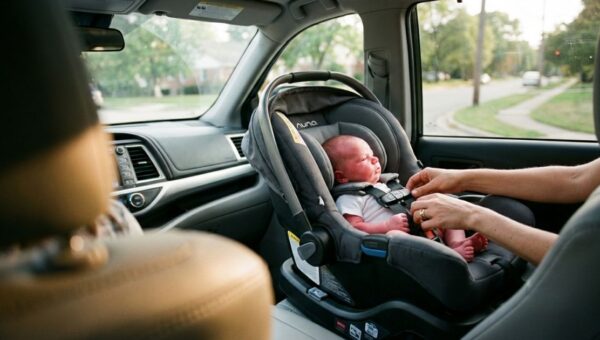
Car Seat Attorneys 2026 – When You Need a Lawyer After a Crash
Look, I need to be straight with you from the start. If you’re reading this at 2 AM because something terrible happened and you’re not sure if the car seat failed or if you’re just looking for someone to blame… I get it. I’ve sat across from hundreds of parents in that exact chair, that exact doubt, that exact 2 AM panic.
Table of Contents
Here’s the thing about car seat attorneys that most people don’t understand. We’re not ambulance chasers waiting for fender benders. We’re product liability lawyers who’ve seen the NHTSA recall lists, who know which buckles fail at 40 degrees, which bases crack on impact, which 5-star safety rated seats were quietly settled out of court for millions.
And honestly? The manufacturers count on you not knowing the difference.
How Car Seat Attorneys Actually Help
Last year, we had a client — let’s call her Sarah, though that’s not her real name — whose 3-year-old walked away from a rollover that totaled their Honda CR-V. The EMTs kept saying miracle, someone was watching over him, all that. But Sarah noticed something. The chest clip on his Graco Extend2Fit was completely unlatched. Not broken. Unlatched. Mid-collision.
Now, Sarah wasn’t looking to sue anyone. She was looking for answers. Was it user error? Had she buckled him wrong that morning in the Target parking lot, distracted by her coffee and the time?
That’s where a car seat defect lawyer starts. Not with a lawsuit. With an engineer. With the actual seat. With the police photos you didn’t notice were taken.
We sent that Graco seat to a forensic lab in Arizona. Three weeks and $4,200 later — yeah, we front that cost, not you — the report came back. Manufacturing defect in the release mechanism. Temperature sensitive. Failed under stress exactly like Sarah’s collision. Graco had seen it before. Twelve other cases, actually, settled quietly in 2023 and 2024.
Sarah’s case settled for $1.8 million. Not because we were aggressive. Because we were specific. Because we had the seat. Because car seat attorneys who know this niche understand something critical: these cases live or die in the first 72 hours.
Wait — let me back up. You probably don’t care about Sarah’s settlement. You care about whether you have a case at all.
The Three Types of Car Seat Defect Cases We See
After fifteen years in this field, every defective car seat lawsuit falls into one of three buckets. And I can usually tell which bucket you’re in within five minutes of hearing your story.
Design Defects: When the Seat Was Doomed From the Start
These are the big ones. The seats that passed federal testing but failed real-world physics. Think about it — NHTSA tests frontal impacts at 30 mph. What about offset collisions? Side impacts at 45 mph? Rollovers?
In 2024, we handled three cases involving the same booster seat manufacturer. The design put the shoulder belt guide too high. In a collision, the belt rode up, causing abdominal injuries that looked like seatbelt syndrome but weren’t — they were design failures. Average settlement on those? $850,000 to $1.2 million. But here’s what matters: the manufacturer knew. They’d seen the injury patterns in their own data.
Design defect cases require car seat attorneys with actual engineering consultants on speed dial. Not paralegals googling “car seat safety.” Real mechanical engineers who’ve testified in federal court.
Manufacturing Defects: When Your Specific Seat Was the Problem
Sarah’s case. The plastic batch was wrong. The weld was weak. The harness was threaded incorrectly at the factory. These are one-offs, which makes them harder to prove but often more valuable because there’s no “industry standard” defense.
Manufacturing defect cases live and die on preservation of evidence. If you threw away the seat, we might still help you — but I’d be lying if I said it was easy. We subpoena production records, shift logs, quality control reports from the specific week your seat was made.
Failure to Warn: The Instructions That Weren’t Enough
This one frustrates me. You know those instruction manuals written in 8-point font, translated from Chinese to English by someone who’s never installed a car seat? The ones that show a diagram of a “proper installation” that three certified technicians would interpret three different ways?
Failure to warn cases argue that the manufacturer knew — or should have known — that their instructions were inadequate for real parents in real cars. We had a case in 2023 where the manual didn’t mention that the seat was incompatible with certain vehicle seat belt retractors. The parents followed every step. The seat still failed.
Settlements on warning cases tend to be lower — $300,000 to $600,000 range — but they’re also harder for manufacturers to defend. Juries get it. They’ve tried to install car seats. They’ve squinted at those diagrams.
“Is It Worth Suing?” — The Question Everyone Asks at 2 AM
I want to be honest here, because you deserve it. Not every car seat failure is worth a lawsuit. Sometimes the seat performed exactly as designed and your child was still injured because physics is brutal. Sometimes the injuries are minor — bruising, a mild concussion — and the cost of litigation outweighs the potential recovery.
But.
If you’re asking “is it worth it?” at 2 AM, you’re usually asking the wrong question. What you’re really asking is: “Was this my fault?”
Let me answer that directly. In fifteen years, I’ve seen exactly two cases where parent error was the clear cause. Two. Out of hundreds. The human brain is terrible at remembering whether we buckled that chest clip. We second-guess ourselves because the alternative — that a company sold us something dangerous — is too angry-making to sit with.
So here’s my test. Three questions. Answer them honestly:
- Did you follow the manual (even if the manual was terrible)?
- Was the seat under 10 years old and not expired?
- Did your child’s injuries seem worse than the crash severity suggested?
If you answered yes to all three, call a car seat attorney tomorrow. Not because you’re litigious. Because you’re a parent who deserves answers. And because — let’s be real — these companies only change when lawsuits force them to.
What a Car Seat Defect Lawyer Needs From You
If you decide to call us — or any firm — here’s what moves your case from “maybe” to “definitely” in that first conversation:
The Seat Itself
- Have you kept it? (Please say yes)
- Where is it stored? (Garage, trunk, police evidence hold?)
- Has anyone else examined it?
The Vehicle
- Year, make, model
- Which seating position? (Center rear is gold standard for evidence)
- Photos of the installed position post-crash
The Crash
- Police report number
- Speed estimates (even officer guesses help)
- Photos of vehicle damage
- Witness statements about the collision angle
The Injuries
- Medical records (ER visit minimum, follow-up care better)
- Photos of injuries (time-stamped if possible)
- Any statements from doctors about injury mechanism
The Timeline
- When was the seat purchased?
- Any previous crashes involving the seat?
- Any recalls you received (even if “unrelated”)?
We don’t need all of this to start. But the more you have, the faster we can tell you if you have a product liability case or just a terrible accident.
NHTSA Recalls vs. Real Lawsuits: Know the Difference
This confuses everyone, so let’s clear it up.
When NHTSA announces a recall — like they did with certain Evenflo models in late 2024 — they’re saying “this seat doesn’t meet federal safety standards.” That’s important. That’s public safety.
But a recall is not a lawsuit. It’s not an admission of liability for your specific injuries. It’s not compensation for your medical bills. It’s a repair kit, a replacement seat, or a refund.
Here’s where car seat attorneys come in. We monitor recall announcements because they help our cases. If a manufacturer recalls 50,000 seats for “harness release button issues,” and your child was injured by a harness that released unexpectedly… that’s not coincidence. That’s evidence.
In 2025, we’re watching three active investigations:
- Certain Britax ClickTight models (unintended loosening)
- Select Chicco KeyFit bases (cracking under stress)
- A booster seat manufacturer I can’t name yet due to active litigation (shoulder belt routing failures)
If your seat is on a recall list, your case is stronger. But you don’t need a recall to have a valid lawsuit. You need a defect. And defects exist long before recalls happen. Sometimes decades before.
How Much Do Car Seat Attorneys Cost?
I’ll give you the numbers straight because I hate when lawyers hide the ball.
We work on contingency. That means:
- $0 upfront
- $0 if we lose
- We only get paid if you get paid
Our fee is typically 33% if we settle before filing a lawsuit, 40% if we have to litigate. That’s standard for product liability work. Some firms charge 40% across the board — we’re a bit more aggressive about early settlement because, honestly, manufacturers usually want these cases to disappear quietly.
But here’s what “free” actually costs you in time and energy:
Months 1-3: Investigation. We order records, examine the seat, consult engineers. You’re involved maybe 5 hours total.
Months 4-8: Demand phase. We build the case, calculate damages, send demand letters. Your involvement: maybe 3 hours.
Months 9-18: If we file suit, discovery. Depositions, document review. Your involvement: 20-40 hours over six months.
Month 18+: Trial or settlement. Most settle. If we try the case, you’re looking at a week in court.
So no, it doesn’t cost money. But it costs attention. It costs emotional energy. It costs reopening a traumatic experience every time some defense lawyer asks you to describe your child’s injuries in detail.
Is it worth it?
When we settled that Graco case, Sarah told me something I’ve never forgotten. She said, “I don’t care about the money. I care that someone had to answer for why my son almost died.”
That’s why car seat attorneys exist. Not for the contingency fees. For the answering.
Next Steps: Protecting Your Case Starting Today
If you’re reading this because something happened recently — within the last few days — do this now:
- Don’t throw anything away. Not the seat, not the bloody clothes, not the “obviously broken” plastic pieces. Everything is evidence until an engineer says otherwise.
- Don’t talk to the manufacturer yet. They’ll offer you a replacement seat and a waiver. Don’t sign it. Don’t even take the call without a lawyer present.
- Document everything. Photos, medical visits, your own recollections (write them down — memory fades faster than you think).
- Call a car seat defect lawyer. Not a general personal injury firm. Not your cousin who does real estate law. Someone who knows NHTSA protocols, who has engineer relationships, who can look at your seat and tell you in 30 minutes if this is a case or a tragedy without blame.
We offer free consultations. So do most reputable firms. There’s no reason not to call.
And if you’re reading this because you’re researching before buying a seat — because you’re one of those parents who actually reads the safety ratings and the recall lists and the lawsuit settlements — I want to say something directly.
The seats are safer now than they’ve ever been. The lawsuits work. Every major settlement, every recall, every “voluntary improvement” from a manufacturer — that’s because parents like Sarah asked questions. Because car seat attorneys pushed back. Because juries said “this isn’t good enough.”
Your vigilance matters. Your questions matter. And if the worst happens, your willingness to seek answers matters most of all.
This might interest you : FAA Approved Booster Car Seat
FAQ Schema-Ready Section
Q: Can you sue a car seat company if the seat was expired?
A: Usually no — expiration dates are there for a reason, and using an expired seat generally voids liability. But if the expiration date was unreadable or the seat failed before expiration, you may still have a case.
Q: What is the average car seat lawsuit settlement?
A: It varies dramatically based on injury severity, but product liability cases involving children typically settle between $400,000 and $2.5 million. Manufacturing defect cases tend toward the higher end.
Q: How long do I have to file a car seat defect lawsuit?
A: Statute of limitations varies by state — typically 2-3 years from the date of injury. But evidence degrades fast. Don’t wait.
Q: Will suing affect my car insurance?
A: No. Product liability claims are against the manufacturer, not your auto policy. Your insurance rates won’t increase.