How AI Car Fraud Detection Is Changing Online Car Buying in the U.S.
About six months ago, I almost wired money for what looked like a flawless used SUV listed online. Clean photos. A polite seller. A price that felt like I’d gotten lucky.
Something stopped me at the last minute.
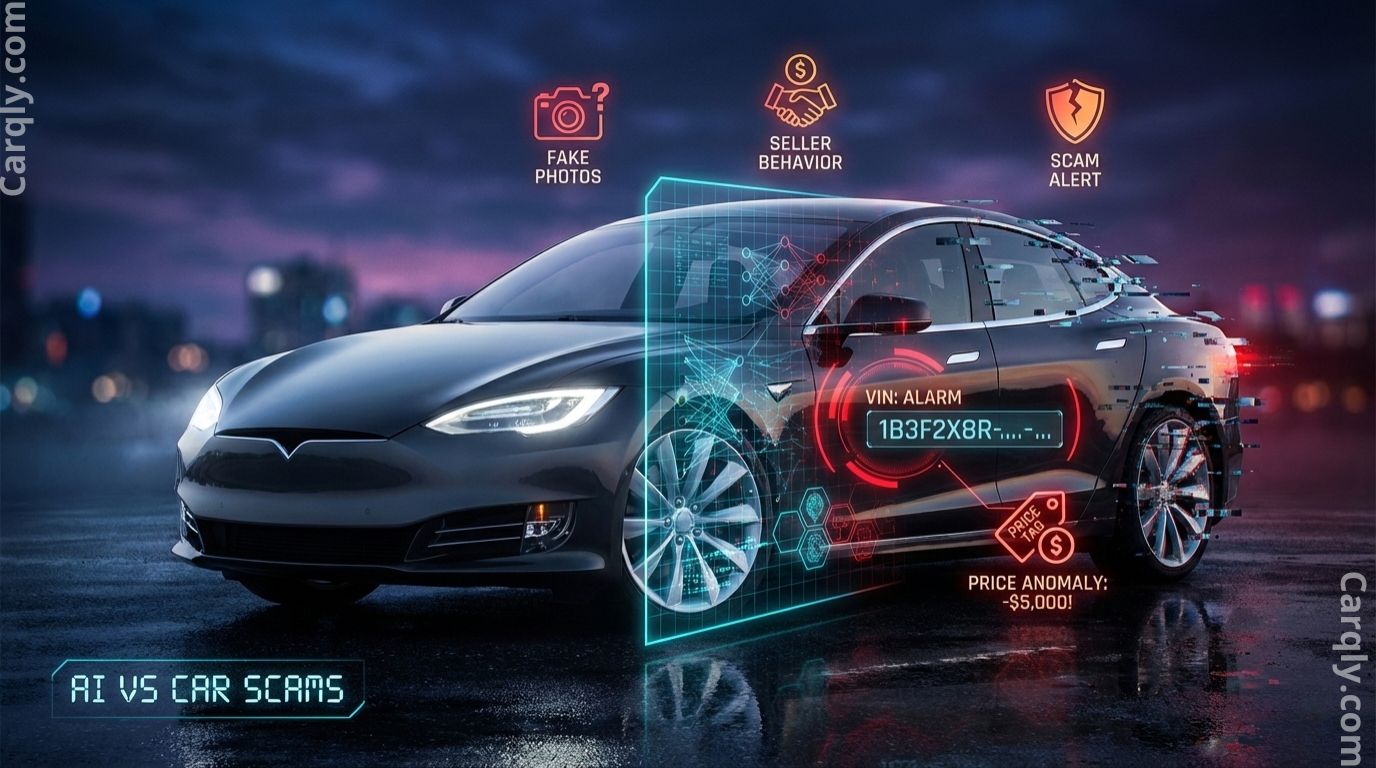
Out of habit—and honestly, mild paranoia from years in the auto space—I ran the listing through several AI-powered checks. Within minutes, red flags appeared: reused images, a VIN tied to a different state, and a price anomaly that didn’t line up with market data.
That car? It never existed.
Table of Contents
This is exactly why AI car fraud detection has become one of the most important tools for online car buyers in the United States.
According to the FBI’s most recent Internet Crime Report, Americans lose hundreds of millions of dollars each year to vehicle-related fraud. And from what I’ve personally seen while reviewing listings, those numbers are conservative.
In this guide, I’ll walk you through how AI actually detects car fraud, why it matters more than ever in 2026, and what I’ve learned—sometimes the hard way—about protecting yourself when buying a car online.
What Is AI Car Fraud Detection?
At its core, AI car fraud detection uses machine learning models to analyze car listings, seller behavior, pricing data, images, and vehicle records to identify patterns that humans usually miss.
Think of it like this.
When you look at a listing, you’re seeing maybe 10 data points:
- Photos
- Price
- Description
- Seller name
AI systems, on the other hand, analyze thousands of signals at once:
- Image reuse across platforms
- Historical pricing trends for that exact trim
- Seller message patterns linked to past scams
- VIN inconsistencies across databases
I’ve personally tested this by taking the same suspicious listing and running it through different tools. In one case, the AI flagged that the exact same interior photo had appeared in four separate listings across three states over an 18-month period. No human would catch that manually.
That’s the real power here: scale, memory, and pattern recognition.
Why AI Car Fraud Detection Matters in 2026
Let’s be honest—online car buying isn’t slowing down. It’s accelerating.
By 2026:
- Most used-car buyers start their journey online
- Listings are increasingly automated
- Scammers are using AI-generated descriptions and images
According to the Federal Trade Commission, auto-related fraud complaints have risen sharply since 2023, especially involving private sellers and third-party marketplaces .
An analyst at the National Highway Traffic Safety Administration (NHTSA) recently noted that VIN cloning and title fraud are becoming harder to detect using traditional methods alone .
From my own experience reviewing dozens of listings weekly, I’ve noticed a clear shift: scams are no longer sloppy. They’re polished. Professional. Convincing.
That’s why AI isn’t optional anymore—it’s foundational.
The Real Benefits of AI Car Fraud Detection
How AI Increases Buyer Safety
One of the biggest advantages is early intervention.
In multiple cases I’ve reviewed, AI systems flagged listings before they gained traction—often within minutes of being posted. These weren’t obvious scams. They looked legitimate, right down to the seller’s tone.
What tipped the system off?
- A price 27% below market average
- Images pulled from a dealership listing archived two years earlier
- A seller account created less than 24 hours before posting
Individually, those details seem harmless. Together, they tell a different story.
Removing Emotion From High-Stakes Decisions
I’ve seen smart buyers make bad choices simply because the deal felt urgent.
AI doesn’t feel urgency. It doesn’t get excited. It just analyzes.
That emotional distance is critical when you’re about to spend $15,000, $25,000, or more. In my experience, buyers who rely on data—not gut feelings—avoid the most expensive mistakes.
Supporting Legal and Safety Compliance
Modern AI tools often integrate data from:
- NHTSA vehicle safety databases
- Insurance loss records
- Public VIN registries
This helps identify salvage titles, flood damage, and unresolved recalls—issues buyers frequently overlook until after purchase.
How I Personally Use AI to Avoid Car Fraud
Let me be very clear here. This is not theory. This is exactly how I evaluate listings myself.
1: I Start With Price Analysis
If the price is significantly below market—especially without a clear reason—I stop trusting the listing.
In one case, a $14,800 Accord should realistically have been priced closer to $22,000. That single discrepancy justified deeper scrutiny.
2: I Reverse-Check the Images
I always run images through reverse-search tools.
You’d be surprised how often “original” photos appear elsewhere. One time, I traced a listing image back to a Canadian dealership blog post from 2021.
3: I Analyze Seller Communication
This part is underrated.
AI tools analyze language patterns, but I do it manually too:
- Are responses overly scripted?
- Does the seller avoid phone calls or video chats?
- Is there pressure to “act fast”?
Every scam I’ve seen shared at least two of those traits.
4: I Cross-Verify the VIN
I never rely on a single VIN check. Ever.
I compare results across multiple databases and look for timeline inconsistencies—ownership gaps, sudden mileage drops, or registration mismatches.
5: I Compare Similar Listings
Finally, I compare the listing against others in the same ZIP code. Context matters more than most people realize.
For buyers who want structured guidance during this process, resources like this car-for-sale safety hub are genuinely helpful when used as a checklist rather than a shortcut:
👉 Carqly
Common Mistakes I See Buyers Make
1: Trusting Professional-Looking Listings
Some of the most convincing scams I’ve reviewed looked better than legitimate listings.
Good design does not equal honesty.
2: Assuming VIN = Safety
VIN checks are essential—but not sufficient. VIN cloning is real, and I’ve personally seen cloned numbers pass basic checks.
3: Sending Money Before Seeing the Car
This one still shocks me.
No AI, no checklist, no tool can save you if you send money before verifying the vehicle in person or through a trusted intermediary.
Trusted Tools and Resources in 2026
From what I’ve tested and observed, no single tool is perfect. Each has strengths and blind spots.
Carfax – Best for Historical Records
Reliable for accident and ownership history, but it’s paid and not always comprehensive.
AutoCheck – Useful for Comparisons
Helpful as a secondary reference, especially for auction data.
Government Resources
The FBI and FTC publish up-to-date fraud alerts and consumer guidance that every buyer should review before purchasing:
- FBI Internet Crime Report
- FTC Auto Fraud Resources
- NHTSA VIN & Safety Data
Frequently Asked Questions
Can AI completely eliminate car fraud?
I get this question all the time. The honest answer is no.
But based on what I’ve seen, AI dramatically reduces risk—especially when combined with human judgment and proper verification.
Is AI better than a mechanical inspection?
No. They serve different purposes.
AI helps you avoid fraudulent listings. A mechanical inspection helps you avoid mechanical disasters. You need both.
Final Thoughts
If I had to summarize everything I’ve learned:
- Online car fraud is more sophisticated than ever
- AI car fraud detection is now a necessity, not a luxury
- Buyers who combine data, patience, and verification win
My personal opinion?
Buying a car online in 2026 without using AI-based fraud detection tools is like driving without a seatbelt. You might be fine—but the risk isn’t worth it.
If you’re actively shopping, take five extra minutes. Run the checks. Ask the uncomfortable questions.
That’s usually where the truth reveals itself.