Best Time to Buy a Car in 2026: Month, Day & Exact Timing to Save Thousands
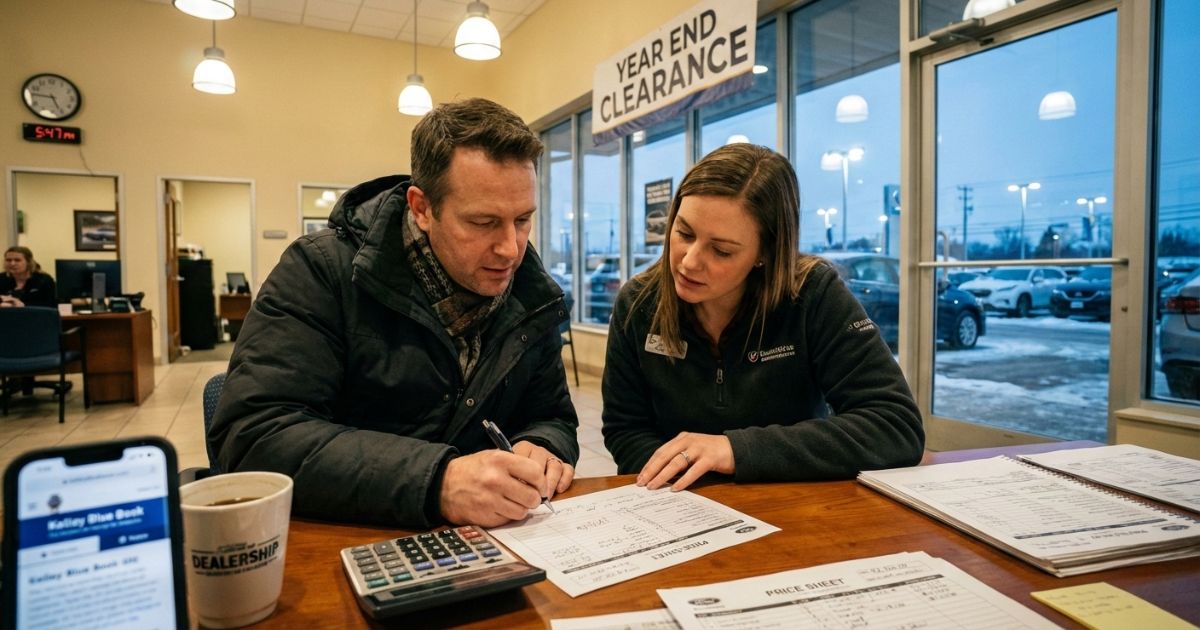
Most car buyers focus entirely on which car to buy and almost nothing on when to buy it. That’s a mistake that costs the average American between $2,000 and $5,000 on every single purchase. Timing a car purchase correctly — down to the month, the day of the week, and even the time of day — is one of the most powerful and underused negotiating advantages available to any buyer. We analyzed data from iSeeCars (40+ million used car sales from 2024–2025), Edmunds, J.D. Power, Kelley Blue Book, and S&P Global Mobility to give you the most complete, data-backed guide to the best time to buy a car in 2026.
The single most important timing principle: Dealerships operate on monthly, quarterly, and annual sales quotas. When those quotas are about to reset — at the end of a month, quarter, or year — salespeople are measurably more motivated to make deals they would never consider at the beginning of a cycle. Everything else in this guide builds on understanding that one principle.
Why Timing Your Car Purchase Can Save You Thousands
Car prices are not fixed. The same vehicle at the same dealership can cost $2,000–$5,000 more or less depending purely on when you walk through the door. This happens because of four overlapping pressures that affect dealer and manufacturer behavior throughout the year.
Dealer quota pressure: Sales managers have monthly, quarterly, and annual targets. At the end of each cycle, hitting those targets can mean bonuses, manufacturer incentives, and continued franchise agreements worth far more than the profit margin on a single car. In the final days of a slow month, dealers will approve deals they would reject on the 5th of the month.
Manufacturer incentive cycles: Automakers layer cash back offers, low-APR financing, and lease subsidies onto specific models at specific times — typically aligned with model year changeovers, holiday sales events, and slow selling periods. Manufacturer discounts averaged 6–7% in mid-2025 per J.D. Power, and those seasonal swings are expected to continue through 2026.
Inventory pressure: When new model year vehicles arrive — typically late summer through fall — dealers need to move prior-year inventory to make room. As new models hit the dealership and need to take up space where the prior year’s models are sitting, the more incentivized salespeople will be to reduce the prices on the outgoing models.
Seasonal demand: Car shopping activity drops significantly in cold months — November through February — because fewer people want to visit dealerships in winter weather. Lower foot traffic means less competition between buyers, giving you more leverage at the negotiating table.
The Best Months to Buy a Car in 2026 — Ranked by Savings Potential
| Month | Savings Potential | Best For | Key Advantage |
|---|---|---|---|
| December | ⭐⭐⭐⭐⭐ Highest | New and used cars | Year-end quotas + model clearance + manufacturer cash stack together |
| January | ⭐⭐⭐⭐⭐ Highest (used) | Used cars especially | 41% more used car deals than average — cold weather kills competition |
| November | ⭐⭐⭐⭐ Very High | New and used cars | Year-end push begins, less competition than December |
| August | ⭐⭐⭐⭐ Very High | New cars — prior model year | 2027 models arrive, dealers discount 2026 stock aggressively |
| Late June | ⭐⭐⭐⭐ Very High | New cars | Incentives hit 6.9% of ATP in June 2025 — year’s highest peak |
| October | ⭐⭐⭐⭐ High | New and used cars | Model year changeover + year-end push begins |
| March | ⭐⭐⭐ Good | New cars | Quarter-end pressure — last weekend of March especially strong |
| September | ⭐⭐⭐ Good | New cars | Quarter-end + model year changeover overlap |
| February | ⭐⭐⭐ Good | Used cars | Cold weather keeps buyers home — low competition, motivated dealers |
| April–May | ⭐⭐ Below Average | Avoid if possible | Tax refund season drives demand up — dealers raise prices |
| June–July | ⭐ Worst (used) | Avoid for used cars | Peak demand — 22.8% fewer used car deals than average in June |
Month-by-Month Breakdown: Best Time to Buy a Car in 2026
December 2026 — The Single Best Month to Buy a New Car
The best month to buy a car in the USA is December because dealerships are trying to hit year-end sales goals. October and November also offer strong discounts if you want to buy earlier in the year. December is where monthly, quarterly, and annual quotas all converge simultaneously — creating a perfect storm of dealer motivation that does not occur at any other time of year.
December 26–31 is especially powerful. For many dealerships, hitting year-end numbers is critical, making them more likely to approve deals with lower profit margins. The final three days of December — December 29, 30, and 31 — are the single strongest buying window of the entire year for new car buyers. Dealerships that have not hit annual targets will approve deals in this window that they would flatly refuse in any other month.
The trade-off: inventory selection thins as the month progresses. If you must have a specific color and option package, start shopping in early December and close at month end. If you’re flexible on color and trim, the final week delivers maximum savings.
2026-specific factor: The final week of December 2026 will again blend strong discounts, high inventory, and motivated dealers eager to close the year, ideal for flexible shoppers.
January 2026 — The Best Month to Buy a Used Car
According to iSeeCars data, January is the best time to buy a used car, with 41% more deals on average. “Everything from colder weather to holiday shopping distracts from car buying, which reduces dealer activity and vehicle demand,” Brauer explained. “Lower demand means lower prices, which bottom out between November 1st and March 1st.”
You can find a good price any time of the month in January, according to Tucker, as the cold weather and hefty holiday bills keep many people from car buying. Weekdays — especially Mondays — are particularly good for deals, with fewer shoppers to compete with.
The iSeeCars study analyzed over 40 million used car sales from 2024 and 2025, defining a good deal as savings of at least 10% — or $2,689 off the average used car price of $26,889. In January, your odds of finding that deal are 41% above average.
Late June 2026 — Best Mid-Year Buying Window
Incentives reached roughly 6.9% of ATP in June 2025, the year’s high, as dealers cleared aging models. A repeat pattern would make late June one of the best buying windows of 2026. For buyers who cannot wait until year-end, late June represents the strongest mid-year opportunity — driven by dealers clearing 2026 inventory before 2027 models begin arriving.
August 2026 — Best for Prior-Model-Year New Cars
Fresh 2027 models arrive, prompting dealers to discount remaining 2026 stock. Shoppers open to the outgoing year will find solid choices and growing pressure on dealers to make space as new arrivals hit lots. August traditionally delivers the best blend of discounts and selection.
August is the strategic sweet spot for new car buyers who want maximum discount without December’s inventory scarcity. You get strong pricing on 2026 models plus full selection before the best units are picked over. Buying a 2025 Honda CR-V in September as the 2026 models arrive could save you an extra $1,500 to $3,000. The same principle applies in August 2026 for any model receiving only minor updates for 2027.
March and September 2026 — Quarter-End Opportunities
Automakers and dealers aim to hit first-quarter goals, often layering bonus cash or low-APR financing. Target the final weekend of March when managers close books and must stretch to meet quotas — a pattern confirmed by J.D. Power data.
September mirrors March’s quarter-end pressure with the added boost of model year changeover activity — making the last weekend of September one of the strongest non-December buying opportunities of the year.
Best Days and Times to Buy a Car — The Data Most Buyers Never See
Beyond months, the specific day of the week and time of day you visit a dealership measurably affects the deal you can get.
| Timing Factor | Best Choice | Why It Works | Savings Impact |
|---|---|---|---|
| Day of Week | Monday or Tuesday | Lowest foot traffic — salespeople have more time and motivation to close deals | $200–$500 additional leverage |
| Time of Day | Late afternoon (4–6 PM) | Salespeople nearing end of shift want to close — less energy for prolonged negotiation on their side | Negotiating advantage |
| Week of Month | Final 3–5 days of month | Monthly quota pressure peaks — managers approve deals they refuse earlier in month | $500–$2,000 additional leverage |
| Avoid | Saturday afternoon | Highest foot traffic — you’re competing with every other buyer, dealers have no urgency | You lose leverage entirely |
The combination that maximizes savings: Final Monday or Tuesday of December, late afternoon, at a dealership that has not yet hit its monthly target. This is the single most powerful timing combination available to any car buyer in 2026.
Best Holidays to Buy a Car in 2026
Holiday sales events are not equal. Some deliver genuine deals backed by manufacturer incentives. Others are primarily marketing events where the “sale” is more label than substance.
| Holiday | Date 2026 | Deal Quality | Data Source |
|---|---|---|---|
| Martin Luther King Jr. Day | January 19, 2026 | ⭐⭐⭐⭐⭐ Best holiday of the year | 65.5% more used car deals than average — iSeeCars 40M sale study |
| New Year’s Eve / New Year’s Day | Dec 31 / Jan 1 | ⭐⭐⭐⭐⭐ Second best | 47.9% more deals than average — iSeeCars |
| Christmas Eve | December 24, 2026 | ⭐⭐⭐⭐ Very strong | 36% more deals than average — iSeeCars |
| Black Friday | November 27, 2026 | ⭐⭐⭐⭐ Strong | 28.4% more deals than average — iSeeCars |
| Labor Day | September 7, 2026 | ⭐⭐⭐ Good | Model year changeover + end of quarter overlap |
| Memorial Day | May 25, 2026 | ⭐⭐ Below Average | High demand reduces dealer motivation — good inventory but weak pricing |
| July 4th | July 4, 2026 | ⭐ Worst holiday | 22.4% fewer deals than average — iSeeCars. Avoid entirely for used cars. |
Martin Luther King Jr. Day (January 19, 2026) is the top holiday of the year for car deals, according to iSeeCars, offering 65.5% more good deals on used vehicles than usual — outpacing even New Year’s Eve and New Year’s Day.
Best Time to Buy a New Car vs. Used Car — Key Differences
The optimal timing is different for new and used car buyers. Understanding the distinction prevents you from using the wrong strategy for your purchase.
Best time to buy a NEW car:
New car pricing is driven primarily by manufacturer incentives, model year changeovers, and dealer quota pressure. The best windows are December (year-end quota pressure), late August through September (model year changeover), late June (mid-year incentive peak), and the final weekend of each quarter (March, June, September).
Best time to buy a USED car:
Used car prices follow the average temperature, with both falling between November and March and bottoming out between December 31 and February 28. The best months for used car deals are January (41% more deals), November, and December — when cold weather suppresses buyer demand and dealers are motivated to move inventory.
April through October are the worst times to buy a used car, while November through March offer far more good deals. June is the worst month for used car deals, with 22.8% fewer deals than average.
The one exception — tax refund season for used cars:
“Tax return season further elevates car shopping activity, with many consumers using their tax returns to purchase a new, or ‘new-to-them’ used vehicle,” Brauer said. “This lets dealers ramp prices up starting in April before they top out in mid-summer.” Avoid used car purchases from April through June if at all possible.
2026-Specific Factors That Affect Car Buying Timing
Several market conditions unique to 2026 change how you should apply general timing rules.
Tariffs and inventory impact:
“With tariffs looming and automakers already announcing increased MSRPs, the answer to almost all questions is to buy right now,” said Ivan Drury, director of insights for Edmunds. “Waiting will only make buying more difficult as we’re already seeing a downward trajectory of new car inventory, which will result in lower discounts.” If you are planning to buy a new car in 2026, tariff uncertainty makes earlier purchases more strategically sound than waiting for a “perfect” timing window.
The new auto loan interest deduction:
Trump’s tax bill introduced a new auto loan interest deduction that allows car buyers to write off up to $10,000 a year in interest paid on qualifying auto loans, with no need to itemize. The deduction applies to purchases made from 2025 through 2028, but does not work with used cars or loans taken out before 2025, and the car must have its final assembly in the United States. This deduction significantly changes the cost calculation for buyers financing a new American-assembled vehicle.
Inventory recovery:
With S&P Global Mobility reporting inventories near 2.9 million vehicles and Kelley Blue Book showing average transaction prices above $50,000 in late 2025, strategic timing can save thousands. With inventory near pre-pandemic levels, dealers have more motivation to deal than at any point since 2021 — making timing strategies more effective than they have been in recent years.
Interest rates:
Once inflation becomes more manageable and the Fed cuts its interest rate, that move trickles down to lenders, which often lower their interest rates as well. Watch for Fed rate decisions throughout 2026 — any rate cut creates an additional window where manufacturer low-APR financing offers become more competitive.
The Worst Times to Buy a Car in 2026
Knowing when NOT to buy is as valuable as knowing the best windows. Based on the data, avoid these timing traps:
Avoid April through June for used cars. Tax refund season floods dealerships with buyers who just received $3,000–$5,000 in refunds and are eager to spend it. Dealers know this and price accordingly. June is the worst month for used car deals, with 22.8% fewer deals than average.
Avoid the first week of any month. Monthly quota pressure has completely reset. Salespeople have 25+ days to hit their numbers and zero urgency to discount. The best deals happen in the final 5 days of a month — not the first 5.
Avoid Saturday afternoon. The highest foot traffic of the entire week. You are competing with the maximum number of other buyers for the salesperson’s attention, and dealers have zero urgency to offer discounts when the showroom is full.
Avoid July 4th weekend for used cars. July 4th ranks as the worst holiday to buy a used car, offering 22.4% fewer deals than average.
Avoid the week after a major sale event. The week after Black Friday, Memorial Day, or Labor Day typically sees dealers return to normal pricing after the promotional period ends. If you missed the sale, wait for the next window rather than buying at regular price.
How to Maximize Your Savings at Any Time of Year
While timing creates the opportunity, preparation and strategy determine how much of that opportunity you actually capture.
Get pre-approved financing before visiting the dealership. Walking in with a pre-approved loan from your bank or credit union removes one of the dealer’s most profitable tools — financing upsell. You can still accept dealer financing if they beat your rate, but you negotiate from a position of strength.
Research the exact transaction price, not MSRP. Use Edmunds, Kelley Blue Book, and Cars.com to find what other buyers in your area are actually paying for the specific vehicle you want. This is your negotiating anchor — not the sticker price.
Get quotes from multiple dealerships before visiting any. Email 3–5 dealers in your area with the exact vehicle specification and ask for their best out-the-door price. Use the lowest quote as leverage at your preferred dealer. Dealers respond to competitive pressure they can see in writing.
Negotiate out-the-door price, not monthly payment. Monthly payment negotiation is the dealer’s preferred framing — it obscures the true cost by mixing purchase price, trade-in value, interest rate, and loan term into a single confusing number. Always negotiate the total out-the-door price as a separate conversation from financing.
Understand what you can and cannot negotiate. Purchase price, trade-in value, financing rate, and add-on products (extended warranty, paint protection, GAP insurance) are all negotiable. Government taxes and registration fees are not.
Month-by-Month 2026 Car Buying Calendar
| Month | Action | Key Dates |
|---|---|---|
| January 2026 | Best month for used car deals — act now | MLK Day (Jan 19) — 65.5% more deals than average |
| February 2026 | Still good for used cars — Presidents Day deals | Presidents Day weekend — look for manufacturer financing offers |
| March 2026 | Quarter-end push — final weekend is key | Last weekend of March — target March 28–31 |
| April–May 2026 | Avoid used cars — tax season inflates prices | Memorial Day (May 25) — decent for new cars with financing offers |
| June 2026 | Worst month for used cars — new car incentives peak late June | Final week of June for new cars — 6.9% incentive peak expected |
| July 2026 | Avoid — July 4th worst holiday for deals | Skip unless targeting specific inventory clearance |
| August 2026 | Best time for prior-model-year new cars | 2027 models arriving — deepest 2026 discounts |
| September 2026 | Quarter-end + model year overlap | Last weekend of September — Labor Day (Sep 7) for financing deals |
| October 2026 | Year-end push begins — strong deals | Full month is competitive — end of month best |
| November 2026 | Strong deals — less competition than December | Black Friday (Nov 27) — 28.4% more deals than average |
| December 2026 | Best month for new cars — maximum dealer motivation | Dec 24 (+36% deals), Dec 29–31 (strongest days of year) |
Conclusion
The best time to buy a car in 2026 is not a single day — it is a strategy built around understanding when dealer motivation peaks, when inventory pressure creates discounting opportunities, and when buyer competition is at its lowest. For new car buyers, the final week of December 2026 is the gold standard — with late June, August, and quarter-end weekends as the next best windows. For used car buyers, Martin Luther King Jr. Day on January 19 offers the highest concentration of deals of any single day of the year, with the entire November–February window being statistically superior to any other period.
The 2026 market adds two unique factors to this equation: tariff-driven price pressure that makes buying sooner smarter than waiting, and a new auto loan interest deduction that makes financing a qualifying new vehicle more affordable than at any point in recent memory. Combine the right timing with pre-approved financing, competitive quotes from multiple dealers, and a clear understanding of the true transaction price — and the difference between a good deal and a great one is measured in thousands of dollars.
This might interest you : Best Car Brands for Reliability in 2026: Ranked by Real Data
For real-time pricing data and current incentive tracking, use Edmunds.com, Kelley Blue Book, and iSeeCars.com before any dealership visit.