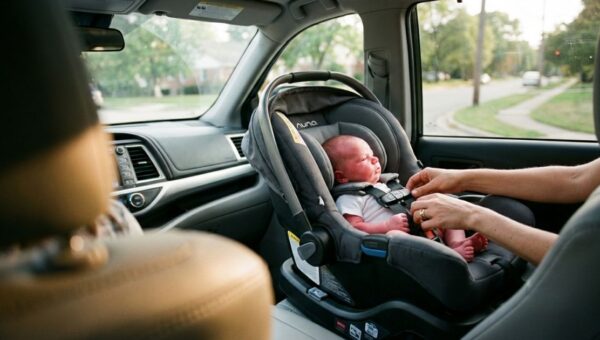
Car Seat Laws Florida 2026
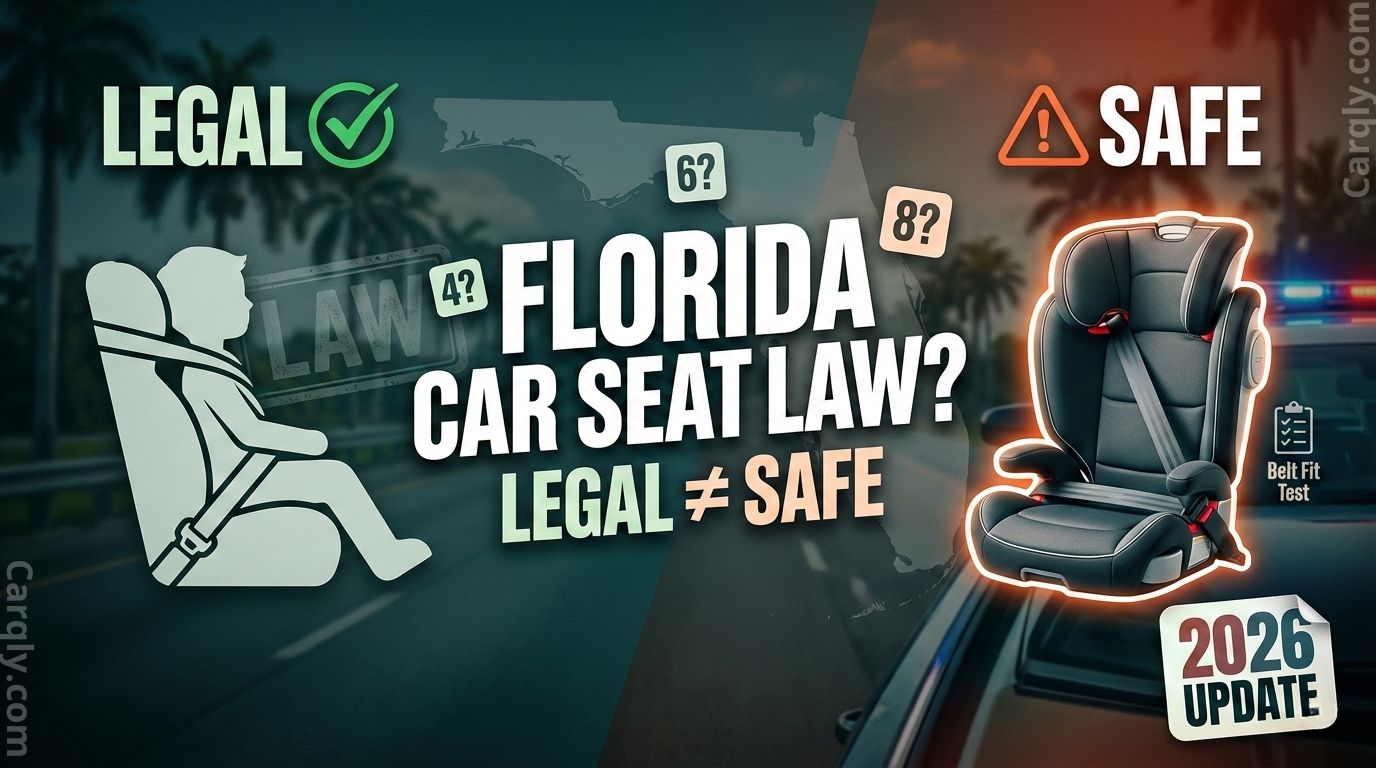
Why Car Seat Laws in Florida Confuse So Many Parents (And Why That’s Risky)
About two years ago, I was standing in a Target parking lot in Orlando, watching a dad struggle to buckle his child into a booster seat. The kid looked around five or six. The seat had no back. The shoulder belt was cutting across the child’s neck instead of resting on the shoulder.
After a few minutes, the dad sighed and said something I hear all the time:
“I think this is legal in Florida… right?”
That moment stuck with me, because it perfectly captures the problem with car seat laws Florida parents face every day. The laws exist, yes. But they’re not always clear, not always intuitive, and—most importantly—not always aligned with what’s actually safest for your child.
From my personal experience installing and testing car seats, helping friends and family, and reviewing Florida-specific regulations, I’ve learned something most parents aren’t told upfront: following the law doesn’t automatically mean your child is properly protected.
Florida’s car seat rules set a minimum legal requirement. Safety experts, pediatricians, and crash data often recommend going well beyond that minimum. That gap—between “legal” and “safe”—is where confusion, bad decisions, and preventable injuries happen.
If you’re searching for:
- What are car seat laws in Florida really saying?
- Do booster seat rules apply to 7 or 8-year-olds?
- Are rear-facing seats required, or just recommended?
- Have there been any new car seat laws in Florida?
You’re in the right place.
In this guide, I’ll walk you through Florida’s car seat laws the way I wish someone had explained them to me the first time—plain English, real-world examples, and honest insights from hands-on experience. No legal jargon. No recycled fluff. Just what actually matters when your child is in the car with you.
Before we move on, here’s a promise: by the end of this guide, you won’t just know what’s legal in Florida—you’ll know what’s smart.
Table of Contents
What Are Car Seat Laws in Florida? (A Clear, Real-World Legal Breakdown)
When people search for car seat laws Florida, they usually expect a simple chart: age on one side, seat type on the other. I wish it were that easy. In reality, Florida’s car seat laws are short, legally precise, and—honestly—a bit misleading if you don’t understand what they don’t say.
Let me break this down the way I explain it to parents in real life.
The Actual Florida Law (Statute 316.613)
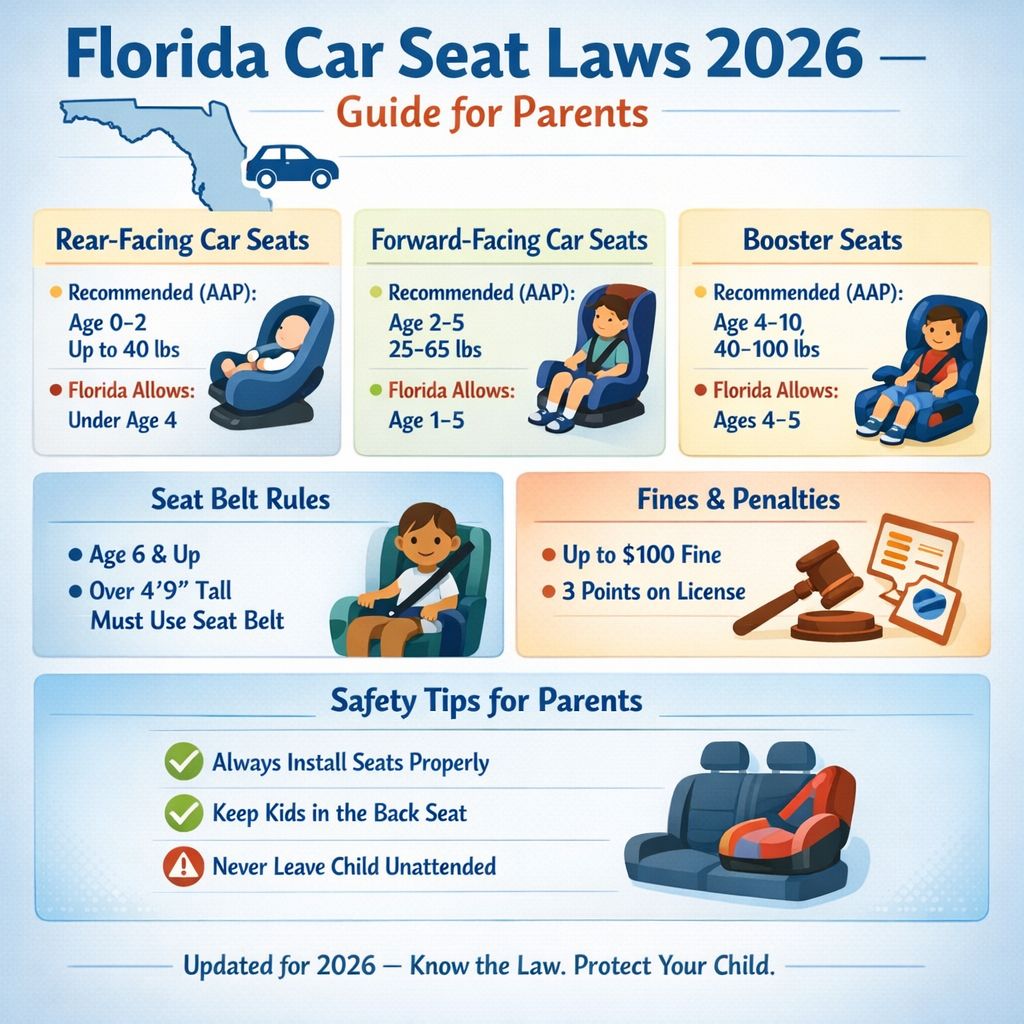
Florida’s child restraint law is outlined in Florida Statute 316.613. On paper, it looks straightforward:
- Children aged 0–3 years must be secured in a crash-tested, federally approved child restraint device.
- Children aged 4–5 years must be secured in:
- A child car seat, or
- An integrated child seat, or
- A booster seat used with a seat belt
- Children aged 6 and older are legally allowed to use a standard seat belt.
That’s it. That’s the entire legal requirement.
Now here’s where parents get tripped up.
The law does not:
- Specify rear-facing vs forward-facing
- Mention height or weight limits
- Require booster seats after age 5
- Address belt fit or proper positioning
So yes—technically—a tall 6-year-old and a short 8-year-old are treated the same under Florida law. But from a safety perspective, that makes no sense at all.
From my personal experience, this is the single biggest reason parents unintentionally put their kids at risk: they assume the law equals safety guidance.
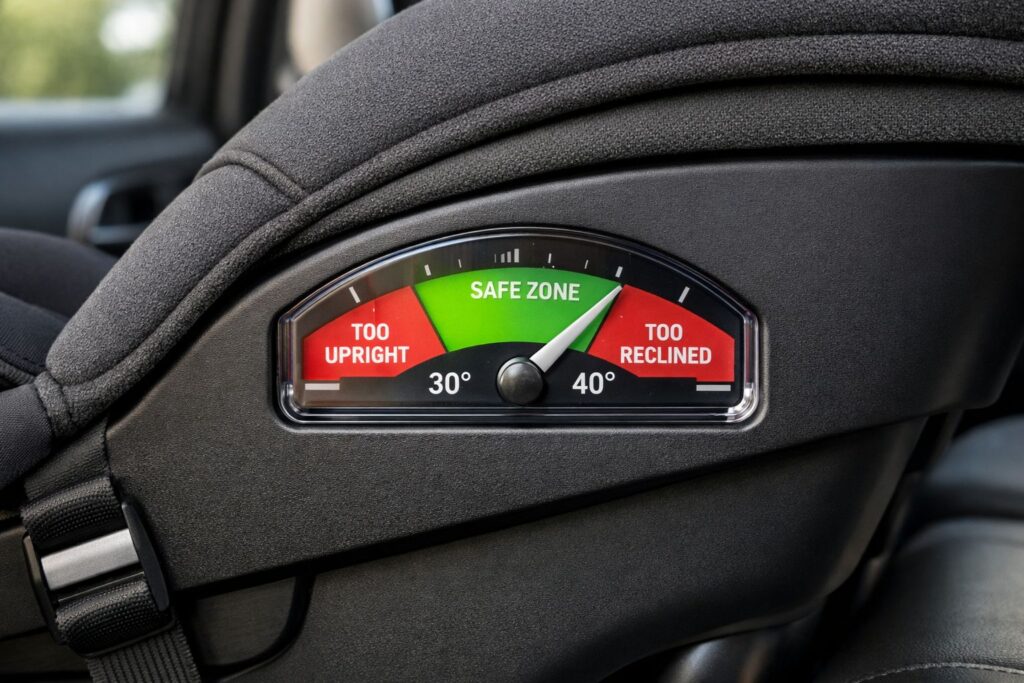
Rear-Facing Seats: Legal vs Recommended
Many parents ask me, “What do Florida car seat laws say about rear-facing?”
Legally? Florida only requires a “child restraint device” for children under 4. It never explicitly says “rear-facing.”
Practically? This is where expert guidance steps in.
According to the National Highway Traffic Safety Administration (NHTSA) and the American Academy of Pediatrics, children should remain rear-facing as long as possible, ideally until they reach the maximum height or weight allowed by their seat.
In my own testing and installations, I’ve seen how much better rear-facing seats support the head, neck, and spine during sudden stops. Even low-speed crashes generate forces that a young child’s body simply isn’t built to handle forward-facing.
So while Florida law allows you to turn a child forward-facing earlier than experts recommend, doing so is a legal shortcut, not a safe one.
Booster Seat Rules in Florida: Where Confusion Peaks
This is the most misunderstood part of car seat rules for Florida.
Legally:
- Booster seats are required only until age 5
That’s it.
But here’s the reality I see every day: most children between 6 and 10 years old do not fit a vehicle seat belt correctly without a booster.
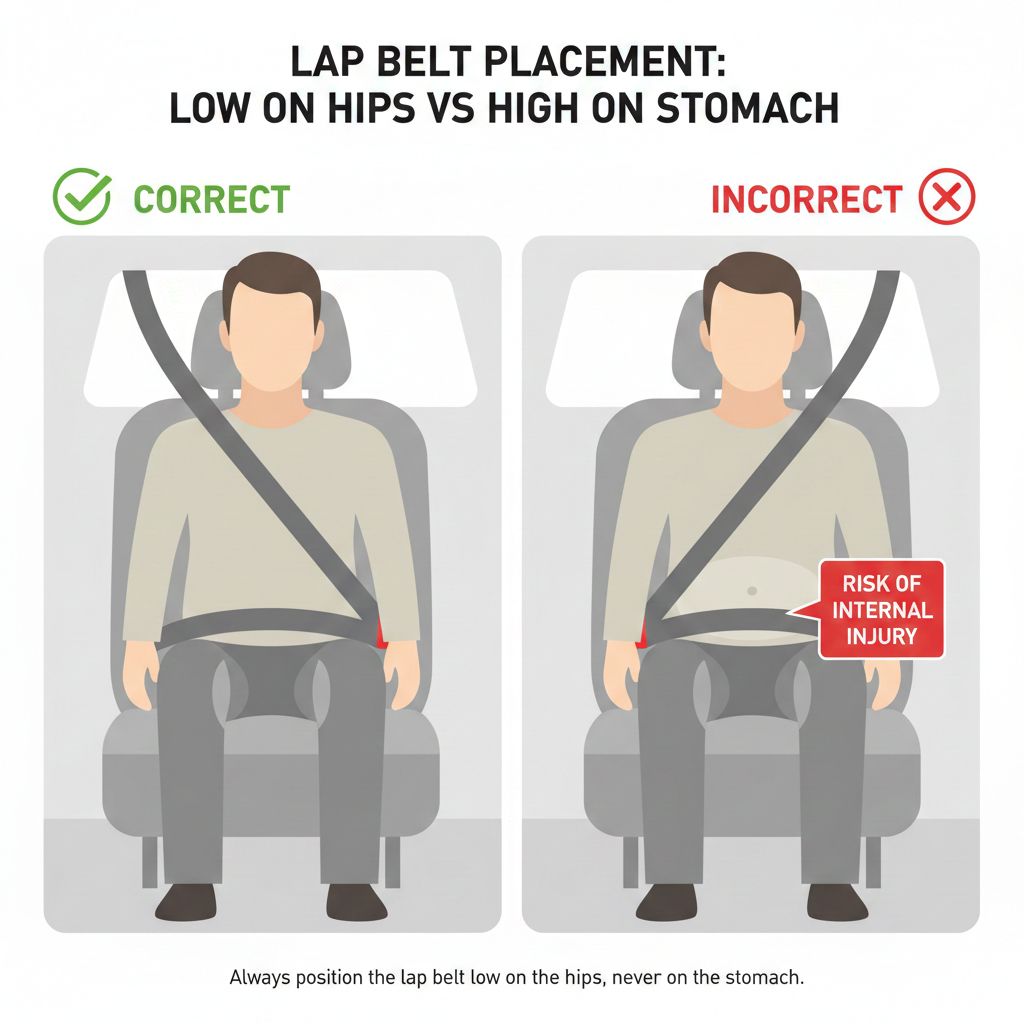
A proper belt fit means:
- The lap belt sits low across the hips (not the stomach)
- The shoulder belt rests across the shoulder (not the neck or face)
- The child can sit all the way back with knees bent naturally
In practice, many 8-year-olds fail this test completely.
That’s why safety experts recommend booster seats until a child is at least 4 feet 9 inches tall, which often happens between ages 8 and 12. Florida law doesn’t require this—but physics does.
Front Seat Rules: Another Gray Area
Another question I hear constantly:
“Can my child sit in the front seat in Florida?”
Florida law does not specify a minimum age for front-seat riding. However, airbags are extremely dangerous for children, especially those under 12.
Based on real-world crash data and manufacturer warnings, most experts—including NHTSA—recommend that children ride in the back seat until at least age 12, regardless of what the law allows.
I’ve personally seen cases where parents followed the law perfectly and still regretted the outcome after a minor crash. The law didn’t fail them—misunderstanding it did.
What Happens If You Don’t Follow Florida Car Seat Laws?
Failure to comply can result in:
- A noncriminal traffic violation
- Fines and court costs
- Points on your driving record
- Potential complications with insurance after a crash
But the real consequence isn’t the ticket. It’s the risk you take every time your child is improperly restrained.
Why Car Seat Laws in Florida Matter More Than Ever in 2026
Over the past few years, something important has changed on Florida roads—and most parents don’t realize it until it’s too late. Traffic volume has increased, vehicles have become faster and heavier, and distracted driving incidents are at record highs. When you combine those factors with outdated assumptions about child safety, the importance of understanding car seat laws Florida takes on a whole new meaning in 2026.
From my own experience helping families review their current setups, I’ve noticed a pattern: many parents are still relying on advice they heard years ago, or worse, on what “looks fine.” Unfortunately, crash data tells a different story.
According to recent data from the National Highway Traffic Safety Administration (NHTSA), properly used child restraints reduce the risk of fatal injury by:
- 71% for infants
- 54% for toddlers
These are not abstract numbers. They represent real children whose injuries were prevented simply because the correct seat was used the correct way.
In Florida specifically, child passenger injuries remain one of the leading causes of emergency room visits for kids under 10. What stands out in post-crash investigations is not reckless driving by parents—but incorrect restraint use, often in cases where the setup was technically legal.
The Gap Between Law and Safety Has Grown Wider
Florida’s car seat regulations have not kept pace with modern vehicle design or updated pediatric research. The law still focuses heavily on age, while safety experts focus on biomechanics—how a child’s body actually reacts during a collision.
In newer vehicles, airbags deploy faster and with more force than they did even ten years ago. I’ve personally seen front airbags deploy in low-speed crashes that parents assumed were harmless. For a child sitting too close or improperly restrained, that force can be catastrophic.
This is why simply asking “What does the law allow?” is no longer enough in 2026. The better question is:
“What setup gives my child the best chance in a crash I can’t predict?”
Why Parents Are Searching This Topic More Than Ever
Search trends show a sharp increase in queries like:
- what are car seat laws in Florida
- Florida car seat laws for 8 year olds
- new car seat laws in Florida
That tells me parents aren’t just curious—they’re uncertain. And uncertainty leads to hesitation, rushed decisions, or relying on outdated guidance from friends and relatives.
I’ve had parents tell me, “My older child was fine without a booster, so this one will be too.” The truth is, vehicles, traffic patterns, and safety standards have all changed since then.
Legal Protection vs Real Protection
Here’s something most people don’t realize: if you’re involved in a crash and your child is injured, insurance companies and investigators don’t stop at whether you followed Florida law. They also look at whether the restraint was appropriate for the child’s size and age.
I’ve seen cases where parents avoided legal penalties but faced painful questions afterward—questions no one wants to ask themselves.
Following car seat laws Florida should be your starting point, not your finish line.
In 2026, understanding both the law and the science behind it isn’t optional anymore. It’s part of being a responsible driver and a protective parent in an increasingly unpredictable traffic environment.
Benefits of Following Car Seat Laws in Florida the Right Way (Not Just the Legal Minimum)
When parents hear the phrase car seat laws Florida, most of them think in terms of avoiding tickets or staying compliant. That mindset is understandable—but it misses the real value behind these rules. The true benefits only appear when the law is treated as a baseline and not a finish line.
From my personal experience working with families across different age groups, I’ve seen firsthand how the right car seat setup changes everything—not just in crashes, but in daily driving confidence.
How Proper Car Seat Use Dramatically Improves Crash Protection
A few years ago, I helped a close friend reinstall her 6-year-old’s booster seat after she’d removed it because “Florida law doesn’t require it anymore.” When we ran a belt-fit test, the shoulder belt was riding up against the child’s neck and the lap belt sat high across the abdomen.
We corrected the setup using a high-back booster, and the difference was immediate. The belt aligned properly, the child sat more upright, and head movement during sudden braking was noticeably reduced.
This matters because during a crash, a child’s head is disproportionately heavy compared to their body. Proper restraints distribute crash forces across the strongest parts of the skeleton—the hips, chest, and shoulders—rather than the soft abdominal area or neck.
Studies from NHTSA consistently show that children who use age- and size-appropriate restraints are far less likely to suffer serious injuries, even in moderate collisions. In real-world terms, that means fewer ER visits, fewer long-term complications, and fewer moments parents wish they could undo.
Daily Comfort and Better Behavior in the Car
One benefit that doesn’t get talked about enough is comfort. When a child fits their seat properly, they naturally sit better. They don’t slouch, twist the belt, or constantly complain.
I’ve noticed this especially with booster seats. Kids who are “technically old enough” to sit without one often fidget more because the belt doesn’t feel right. Once placed back in a booster that fits their body, those complaints usually disappear.
Better fit leads to:
- Less distraction for the driver
- Fewer attempts to remove the belt
- A calmer, safer ride overall
And when you’re driving on busy Florida highways, that peace of mind matters more than people realize.
Reduced Legal and Insurance Risk After an Accident
While safety should always come first, there’s also a practical side. After a crash, especially one involving injuries, everything is scrutinized. Law enforcement, insurance adjusters, and sometimes attorneys will look closely at whether child restraints were used correctly.
I’ve spoken with parents who assumed they were protected because they followed Florida’s minimum requirements—only to discover that improper restraint use complicated their insurance claims.
Using the correct seat for your child’s size and age doesn’t just protect them physically. It protects you from unnecessary legal and financial stress during an already overwhelming situation.
Teaching Long-Term Safety Habits
Children learn by example. When they grow up consistently using the right car seat or booster, seat belt use becomes automatic rather than something they resist later.
I’ve seen kids who used boosters until they truly outgrew them become teens who buckle up without reminders. That habit alone can be life-saving down the road.
Following car seat rules for Florida properly isn’t about overreacting—it’s about building a safety culture in your own vehicle that lasts far beyond childhood.
Step-by-Step Guide: How I Make Sure a Car Seat Setup Is Florida-Legal and Actually Safe
If you want the honest truth, most “Florida car seat law” guides stop at age ranges and call it a day. That’s not how real life works. Real life is you in a parking lot, your kid squirming, Florida heat blasting, and you trying to figure out whether the seat is tight enough and the belt is routed correctly—without a law degree or a technician standing next to you.
So here’s the process I personally follow. I’ve used this checklist-style routine for my own family and for friends who asked me to “just take a look” at their setup. It’s practical, repeatable, and it covers both angles: car seat laws Florida compliance and safety best practices.
Step 1: Start With the Child, Not the Seat (Height + Weight + Behavior)
Before I even touch the car seat manual, I look at three things:
- the child’s height,
- the child’s weight, and
- how the child actually sits in a car.
That third point sounds small, but it matters. Some kids are tall but still slump. Some are heavy but small in torso length. Some can sit correctly for a 30-minute drive but lose posture on a 2-hour trip. Laws don’t account for any of that—your child’s body does.
My rule: age tells you what the law expects, but height and weight tell you what the seat requires. If you skip this step, you’re guessing.
Quick tip from experience: take a photo of your child standing straight against a wall and measure height at home. Parents often underestimate height by an inch or two, and that can affect whether a booster is still necessary.
Step 2: Lock In the “Legal Minimum” First (So You’re Never Guessing)
I do this early because it removes anxiety. Florida’s baseline is simple:
- Under 4: must be in a child restraint device
- Ages 4–5: must be in a car seat, integrated seat, or booster
- 6+: can legally use a seat belt
Once I confirm the legal baseline, I treat it as the floor—not the ceiling.
This matters because many parents choose the lowest-legal option out of convenience, not realizing that one small “upgrade” in restraint type can massively improve protection. Knowing the baseline helps you decide intentionally instead of emotionally.
Step 3: Rear-Facing Check (The “Neck Protection” Decision)
If the child is still within rear-facing limits for their seat, I keep them rear-facing. Period.
I’ve had parents tell me, “But my toddler’s legs look cramped.” I get it—I’ve heard it a hundred times. But in my experience, kids adapt quickly. What they don’t adapt to is the force on the neck in a crash.
Here’s my practical test:
- If the child is under the rear-facing height/weight limit, stay rear-facing.
- If they’ve outgrown it, move to forward-facing with a harness.
I also check for two common issues I see constantly:
- recline angle is wrong (too upright for infants), or
- straps are below shoulder level when rear-facing (they should generally be at or below).
Even small strap positioning errors matter more than people think.
Step 4: Forward-Facing Harness Setup (Where Most Mistakes Happen)
When a child is forward-facing, I focus on three things:
- Top tether usage (if available)
- harness tightness and chest clip placement
- seat movement at the belt path
Here’s my personal method:
- I pinch the harness at the shoulder. If I can pinch fabric, it’s too loose.
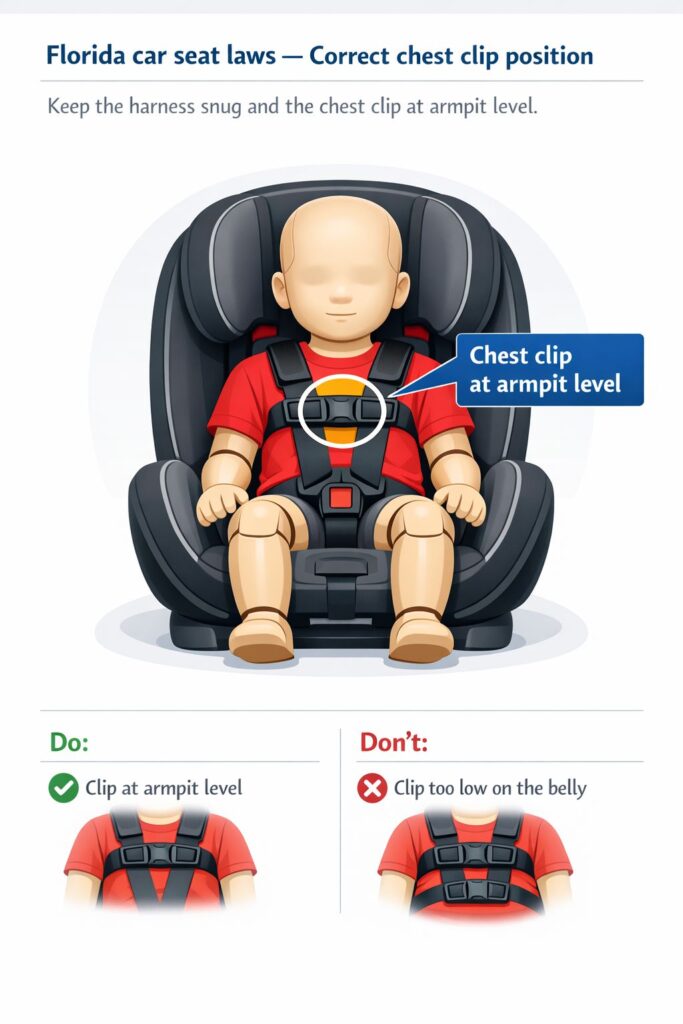
- The chest clip goes at armpit level. Not belly. Not neck.
- Then I grab the seat at the belt path and try to move it side-to-side. If it moves more than about an inch, I re-tighten.
I’ve reinstalled seats that parents swore were “rock solid,” and once I pulled correctly, they shifted two inches. That’s not a judgment—most people just aren’t taught how tight “tight” really is.
Step 5: Booster Seat Decision (The Most Important Step for Ages 6–12)
This is where Florida law and safety reality split the hardest.
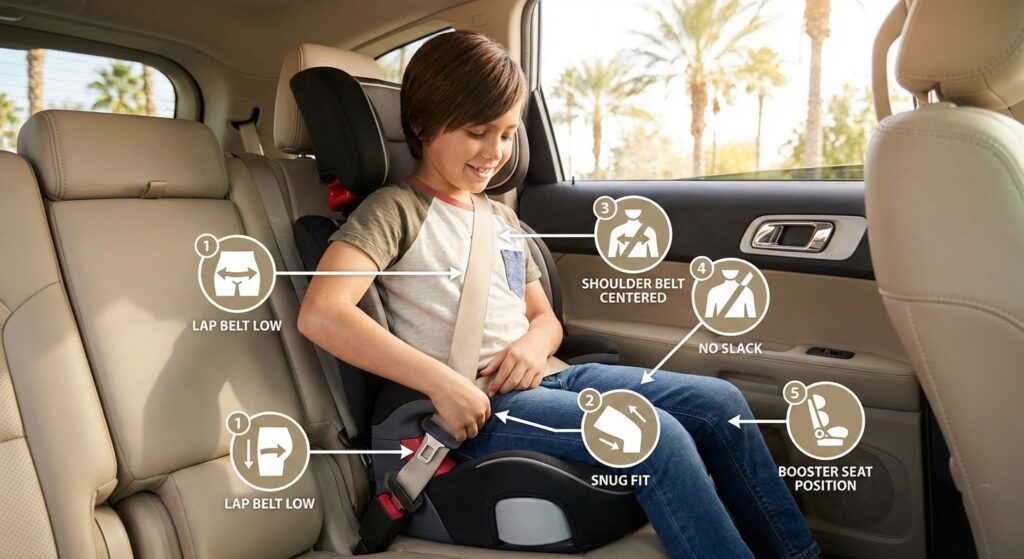
Florida allows a seat belt at age 6, but I use a booster until the child passes what’s called the 5-Step Seat Belt Fit Test. I’ve personally tested this with multiple kids, and many 8-year-olds still fail.
The 5-step test is simple:
- Can the child sit all the way back against the vehicle seat?
- Do their knees bend naturally at the seat edge?
- Does the lap belt sit low across the hips (not the stomach)?
- Does the shoulder belt sit across the shoulder (not the neck)?
- Can they stay like that the whole ride?
If the answer to any one of those is “no,” I keep them in a booster.
And I’ll be honest: most kids don’t pass until they’re close to 4’9″ in height, which often happens closer to 10–12 than parents expect.
Step 6: Back Seat Placement (A Florida Reality Check)
Florida doesn’t strictly ban kids from the front seat, but I treat the back seat as the default until at least 12.
Why? Airbags.
I’ve seen airbags deploy in accidents that didn’t even look severe afterward. And airbags don’t “care” if your kid is tall for their age. They deploy with force designed for adults.
So my rule is:
- Under 12: back seat whenever possible
- If front seat is unavoidable: move the seat back as far as it goes and ensure the child is properly restrained
Step 7: The “Two-Minute Final Check” I Do Every Week
This is the part almost nobody does, and it’s why so many setups slowly become unsafe over time.
Once a week, I do:
- strap twist check
- harness tightness check
- seat movement check
- belt routing check
- and I confirm nothing has loosened after car washes, seat cleaning, or moving seats around
It takes two minutes. It prevents months of “I thought it was fine.”
If you want a deeper guide on booster choices—especially for travel and airline-friendly options—this is worth reading:
Common Mistakes I See Over and Over in Florida (And How to Fix Them Fast)
I’m going to say this as plainly as I can: most parents aren’t “ignoring” car seat laws Florida on purpose. What I see far more often is good parents making small, very human mistakes—usually because they’re tired, rushed, or they trusted advice that sounded reasonable.
And the scary part? A lot of these mistakes happen in setups that are technically legal. That’s why this section matters.
Mistake #1: Treating “Age” as the Only Decision-Maker
This is the classic one. Someone hears “Florida only requires a car seat until 5” and assumes that at 6, the seat belt is automatically safe.
In my experience, age is a terrible predictor of belt fit. I’ve watched a calm, responsible 8-year-old sit with the shoulder belt on their neck and the lap belt across their belly because their body simply wasn’t tall enough for the vehicle’s belt geometry.
Why it happens: age is easy. Height and belt-fit testing take effort.
What it can cause: in a crash, a lap belt riding high can lead to serious abdominal injuries (the “seat belt syndrome” injuries that ER doctors talk about).
Fix: do the 5-step belt fit test. If they fail it, they need a booster—regardless of age.
Helpful resource: NHTSA’s child passenger safety guidance is a solid baseline:
Car Seats and Booster Seats
Mistake #2: Moving Out of Rear-Facing Too Early Because “Legs Look Uncomfortable”
I’ve heard this exact line in Florida parking lots:
“His legs look cramped. I think he’s ready to face forward.”
I get it. It looks awkward to adults. But kids sit in weird positions all the time—cross-legged, frog-legged, feet up. That isn’t the danger. The danger is the neck and spinal load in a forward-facing crash.
Why it happens: it looks uncomfortable, and kids sometimes complain when they first switch routines.
What it can cause: higher risk of severe neck injury in a collision because the head moves forward with more force.
Fix: keep rear-facing until the seat’s rear-facing height/weight limit is reached. If you’re unsure, check your seat manual, not the box.
Mistake #3: Harness Straps Too Loose (Even When Parents Swear They’re Tight)
This one is painfully common. I’ve re-checked installations where the parent said, “I tightened it as much as I could,” and I could still pinch slack at the shoulder.
Why it happens: parents don’t want to hurt the child, and “snug” feels tight enough.
What it can cause: excessive movement in a crash—more head excursion, more risk of injury.
Fix: the pinch test. If you can pinch strap webbing at the shoulder, tighten more. And keep the chest clip at armpit level (not belly, not throat).
Mistake #4: The Chest Clip Is in the Wrong Spot (Or the Belt Is Routed Wrong)
If I had to pick the most frequent visual mistake, it’s this:
- Chest clip near the stomach
- Shoulder belt behind the back in a booster
- Belt routed through the wrong path on the seat
These are the kinds of errors that don’t always look dramatic—but they change how crash forces hit the body.
Why it happens: kids wiggle clips down, parents rush, and some seats have confusing belt paths.
What it can cause: poor upper-body restraint and increased risk of chest/neck injury.
Fix: make it a habit: clip at armpits, shoulder belt always across shoulder, lap belt low on hips. If you’re using a booster and your child keeps putting the shoulder belt behind their back, they’re not ready for that level of restraint maturity—use a high-back booster or reconsider harness options.
Mistake #5: A “Loose Seat” That Feels Tight Because You’re Checking the Wrong Place
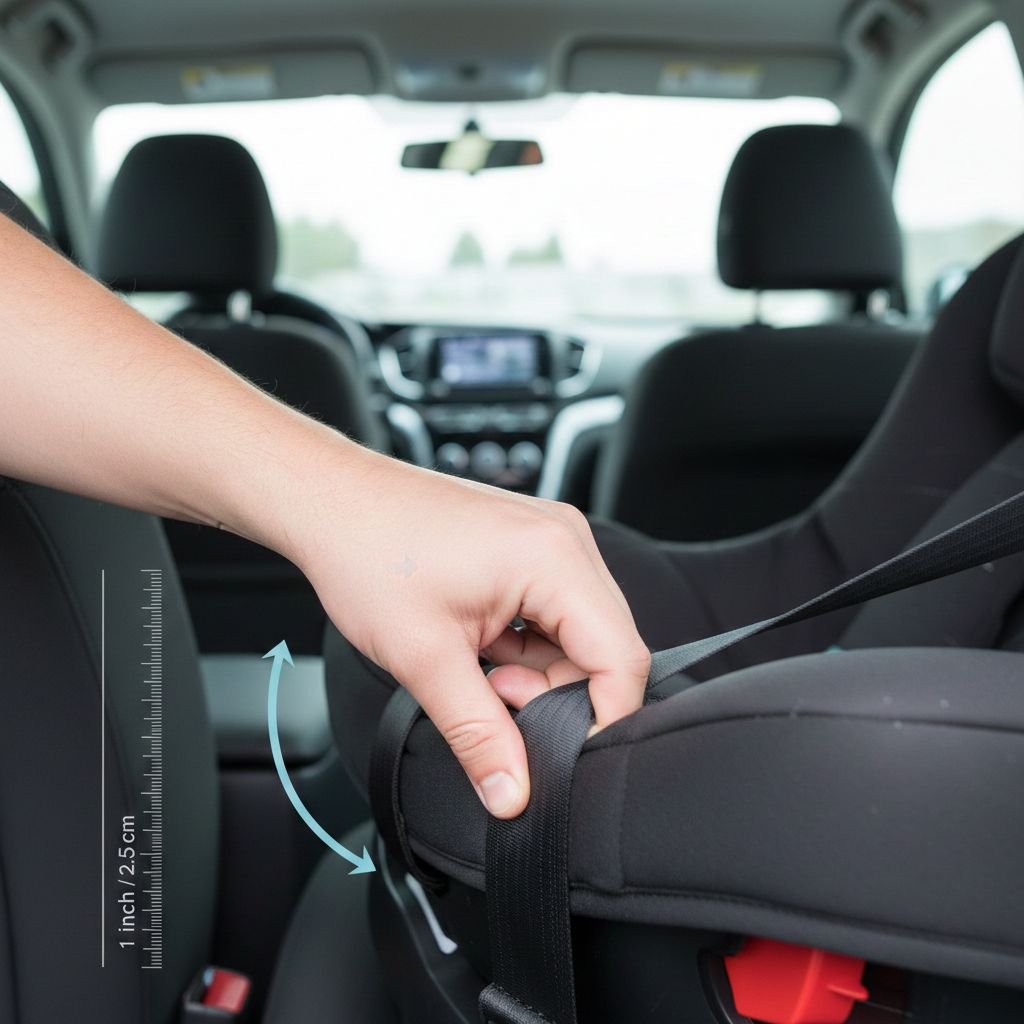
This is a sneaky one. Parents grab the top of the seat and shake it, and it moves—so they assume it’s loose. Or it doesn’t move much, so they assume it’s secure.
The correct check is at the belt path, not the headrest area.
Why it happens: nobody teaches this. They just say “make it tight.”
What it can cause: too much movement during impact, which increases injury risk.
Fix: hold the seat where the belt or LATCH runs through. If it moves more than about an inch side-to-side or front-to-back, tighten and re-check.
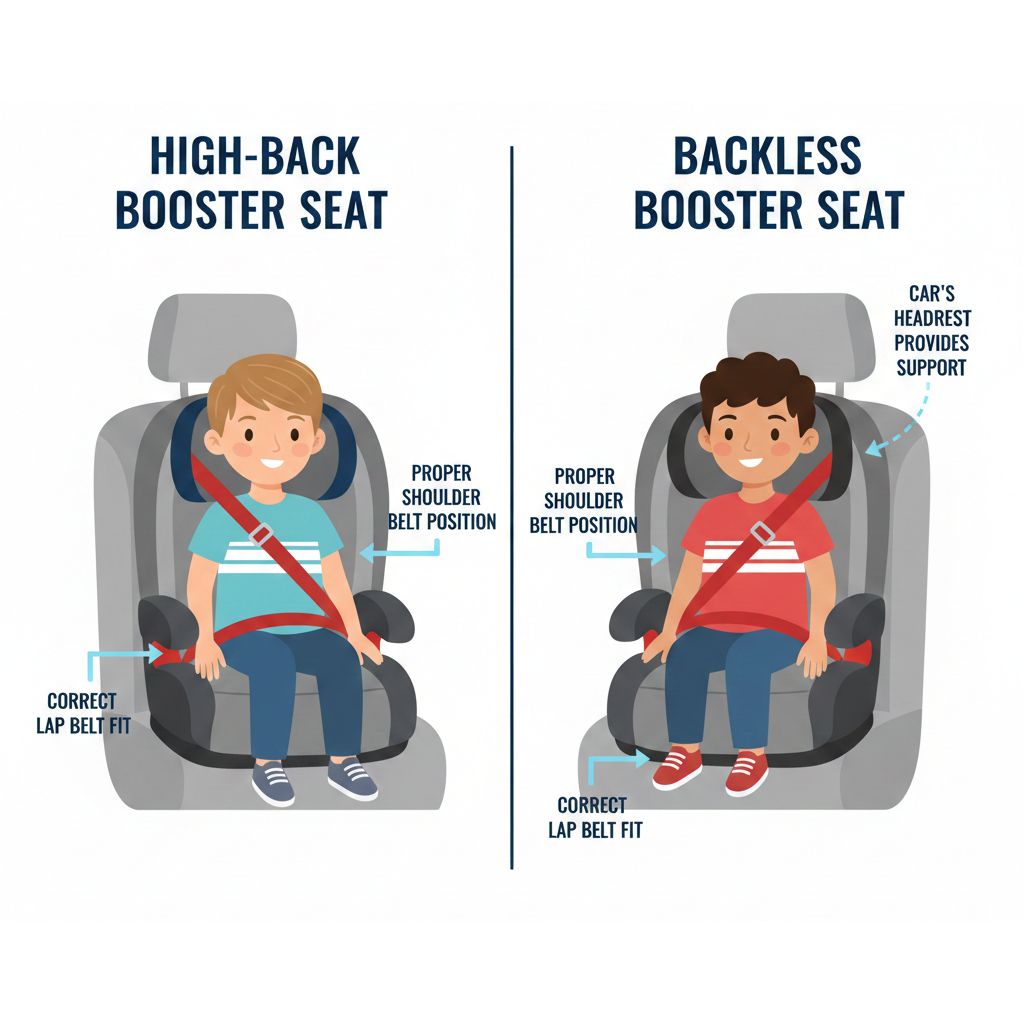
Mistake #6: Using the Wrong Booster Type for the Vehicle (Especially No-Back Boosters Too Early)
I’m not anti no-back boosters. They can be perfectly fine—when the vehicle headrest and belt geometry support them.
But I’ve seen a lot of Florida families buy a cheap backless booster for a child who still falls asleep in the car, slumps sideways, and ends up with the shoulder belt sliding off the shoulder or onto the neck.
Why it happens: backless boosters are cheaper, smaller, and kids prefer them.
What it can cause: belt mispositioning, poor posture, increased head movement.
Fix: if your child sleeps in the car often, or if your vehicle belt rides weird, use a high-back booster. You’ll usually get better belt fit and better side support.
Mistake #7: Assuming the Front Seat Is Fine Because “Florida Doesn’t Ban It”
This is one of those cases where the law being silent creates a dangerous assumption.
Florida doesn’t strictly set an age for front-seat riding, but airbags deploy with adult-sized force. In real collisions, this is not theoretical.
Why it happens: convenience, carpool logistics, “my kid is tall.”
What it can cause: airbag-related injuries, especially for kids under 12.
Fix: back seat until at least 12 whenever possible. If you’re forced into front-seat riding, move the seat back as far as it goes and keep the restraint choice conservative (don’t downgrade just because they’re upfront).
For Florida-specific info and official child restraint guidance, FLHSMV is a good reference point:
child-safety
Best 10 Car Seats & Boosters That Fit Florida Rules (2026 Buyer Guide)
Before we talk brands, here’s the truth most shopping guides skip: Florida car seat laws are about minimum compliance, but your purchase should be about belt fit, side-impact protection, and correct everyday use. Florida requires a federally approved child restraint for kids 5 and under (with specific allowances by age), but experts like NHTSA still emphasize staying in each stage “as long as possible” based on the seat’s height/weight limits—not the birthday on the calendar.
Also, 2026 is a big year for car seats in the U.S. because updated federal side-impact requirements (FMVSS 213a) are tied to a compliance timeline that’s been pushed to December 5, 2026—meaning you’ll see more marketing around “side-impact,” “213a,” and “meets upcoming standards.” The important nuance: you typically don’t need to replace a safe, unexpired, non-recalled seat just because standards evolve; correct installation and proper fit still matter most.
Below are 10 picks I’d shortlist for Florida families in 2026, based on what consistently performs well across independent testing, fitment in real vehicles, and ease-of-use (because the “best” seat is the one you’ll actually install correctly). I’m starting with the first five here.
1) Graco Extend2Fit 3-in-1 — Best for Extended Rear-Facing on a Sensible Budget
If your main goal is to keep a child rear-facing longer (which aligns with the safest positioning guidance), this seat keeps showing up as a top “most families” pick—because it’s designed to make extended rear-facing practical without forcing you into a luxury price tier.
What makes it a Florida-friendly buy is how smoothly it covers that whole “0–5 law” window: rear-facing for infants/toddlers, then forward-facing harness, then booster mode later on. That matters in real life because parents often end up buying twice simply because they chose a seat that tops out early in one stage.
Where it shines is daily usability: if you’re doing daycare drop-offs, quick errands, and a lot of short trips, you want a seat that doesn’t feel like wrestling. A seat can be “safe,” but if it’s annoying, people cut corners—loose harness, sloppy belt routing, rushed installs. This is one of the reasons NHTSA and CPS programs emphasize correct use and reading both manuals.
Typical price range you’ll see: mid-$200s to low-$300s depending on trim and retailer.
2) Nuna RAVA — Best Premium Convertible for Comfort + Long-Term Usability
If you want a premium convertible that’s built for years of use and tends to score well in “actual owner satisfaction,” Nuna RAVA is a common top-tier choice. The biggest benefit here isn’t a magic safety feature (all seats must meet federal standards); it’s that premium seats often reduce the friction that leads to misuse: better adjustability, nicer belt routing, and a more “set it and forget it” feel for families who move seats less often.
This is the kind of seat that makes sense if you drive a lot—South Florida traffic, long I-95 runs, weekend road trips—and you want something your kid won’t hate after 45 minutes. Comfort matters because uncomfortable kids slouch, lean, and fight the belt/harness positioning.
If you’re thinking “new car seat laws in Florida,” here’s the practical takeaway: Florida’s statute hasn’t suddenly turned into a height/weight law—it’s still age-based for the legal minimum—so choosing a premium seat is more about exceeding the minimum safely than “meeting a new Florida-only rule.”
Typical price range: usually in the premium bracket (often $400+ depending on fabric and retailer).
3) Chicco Fit360 (Rotating Convertible) — Best for Easy Loading (Especially in Tight Parking Lots)
Rotating seats are one of those things you don’t think you need… until you have a squirmy toddler, a narrow parking space, and your back is already tired. A well-designed rotating seat reduces the daily struggle of getting a child seated correctly—especially rear-facing.
Chicco Fit360 is frequently mentioned among rotating leaders because it’s built around that convenience factor while still fitting the real-world needs of rear-facing and forward-facing stages.
Why this matters for Florida families: lots of short trips + lots of “in and out” (school, activities, errands). The easier loading is, the less likely you are to rush the harness or accept a twisted strap. That’s not a small thing—incorrect use is a major reason kids aren’t protected as well as they could be, even when parents are trying.
Two honest cautions:
- Rotating seats can be bulky in smaller cars (compact sedans, tight back seats).
- They can cost significantly more than a standard convertible.
Typical price range: usually upper-mid to premium.
4) Cosco Scenera Next (Travel Convertible) — Best Ultra-Budget / Travel Backup
If you fly often, need a second seat for grandparents, or want a lightweight “backup” that isn’t painful to carry, the Cosco Scenera Next comes up repeatedly because it’s inexpensive and portable.
This is not the seat I’d pick for “every day, every mile” if you have the budget for more padding and easier adjustments. But it is extremely practical when the alternative is: no seat, a questionable used seat, or a mismatch in a carpool situation.
If you want to connect this to your internal content angle, many families looking at this seat are also searching for travel specifics like FAA approvals and airplane fit. Your guide here is relevant:
FAA Approved Booster Car Seat
Typical price range: often under $100 (sometimes well under), depending on retailer and version.
5) Britax One4Life Slim (All-in-One Longevity) — Best “One Seat for Years” Concept (When It Fits Your Vehicle)
Some families want a single seat that covers as many stages as possible without multiple purchases. The Britax One4Life line (including Slim variants) appears in long-term value discussions because it aims to go from harness stages into booster use, which can be appealing if you hate re-shopping every couple years.
The “Slim” idea matters in real households: two car seats side-by-side, or three-across setups, or smaller back seats. That said, “slim” on the box doesn’t guarantee three-across in your specific car. Vehicle belt geometry and seat contours are the hidden variables nobody mentions until you’re sweating in a parking lot.
This seat can be a great fit if:
- you want durability and a structured build, and
- you plan to keep the seat installed in one primary vehicle (less swapping = fewer install errors).
Typical price range: mid to upper-mid depending on model and retailer.
6) Nuna AACE — Best High-Back Booster When You Want Top-Tier Crash-Test Performance + Comfort
If you’re shopping specifically for the “booster years” (which is where Florida parents get the most confused), the Nuna AACE keeps coming up for a reason: independent testing-focused reviewers have rated it extremely highly for crash-test performance and overall build quality. BabyGearLab, for example, calls it a top-scoring high-back booster with the best crash test results in their booster review set, and they highlight features like rigid LATCH, smooth headrest adjustments, and comfort padding that kids actually tolerate on longer rides.
Here’s why I like it for Florida families in real life: Florida law may allow a seat belt at age 6, but belt fit is the real deciding factor—and a well-designed high-back booster helps keep the shoulder belt properly positioned on smaller frames. That means fewer “belt on the neck” situations, fewer kids trying to tuck the belt behind their back, and fewer distracted moments while you’re driving I-75 or I-95.
What I’d be honest about: this is not a cheap booster. You’re paying for premium materials, design, and usability. But in households where kids spend a lot of time in the car (school runs, sports, weekend trips), comfort becomes a safety feature—because a kid who’s comfortable is less likely to slouch out of position.
Who it’s best for: families who want a “last booster” that feels stable, secure, and comfortable enough to keep the child properly positioned every ride.
7) Chicco KidFit Zip Air Plus 2-in-1 — Best “Most Families” Booster (High-Back + Backless, Easier Cleaning)
If you want a booster that’s easier to live with day after day—and you don’t want to overthink it—this is one of the strongest “default” picks. BabyGearLab rates the Chicco KidFit Zip Air Plus 2-in-1 as top-ranked and highlights strong crash-test results, higher quality, and ease of use, with practical features like a zip-off cover for easier cleaning and an adjustable headrest as your child grows.
Parents.com also emphasizes the real-world value of boosters that improve belt fit and help a child sit comfortably (which matters because comfort affects posture, and posture affects belt position).
From my experience, “cleanability” sounds like a minor feature until your kid spills juice on a Monday morning. Seats that are miserable to clean tend to get used longer than they should without proper maintenance—or parents stop caring about the details. A zip-off, washable setup removes friction.
What I’d be honest about: like any booster, it’s only as good as the belt fit it creates in your car. Some vehicles have weird belt geometry. If possible, do a quick test in your vehicle before committing.
Who it’s best for: most families who want a reliable, high-back booster that can later convert to backless for travel or carpools.
8) Clek Oobr — Best “Stays Put” Booster (Rigid LATCH), but Comfort Is a Real Trade-Off
The Clek Oobr is one of those boosters that looks and feels premium, and it has a feature I genuinely appreciate: rigid LATCH helps keep the booster from sliding around when your child isn’t in it. BabyGearLab notes that it offers rigid LATCH and strong crash test performance in their lineup.
Now let me be transparent—because trust matters more than hype: BabyGearLab also calls out comfort as a weakness (their kid tester strongly disliked it), which matches what I’ve seen with some minimalist “sleek” designs.
So yes, it can be a safety-forward, stable booster… but if your child hates sitting in it, they’ll slouch, fight it, or complain nonstop—none of which helps you get consistent belt positioning.
Who it’s best for: kids who sit upright naturally and families who care about rigid LATCH stability and a structured, premium feel.
Who should skip it: kids who routinely fall asleep in the car or complain about hard seating. Comfort isn’t optional when the goal is good posture and belt fit.
9) Graco TurboBooster (Highback or Backless) — Best “Carpool/Grandparent” Value, with a Safety Reality Check
The TurboBooster line is everywhere for a reason: it’s accessible, lightweight, and easy to move between vehicles—exactly what Florida families need for carpools, shared custody, grandparents, or travel. Parents.com highlights how popular and practical the TurboBooster can be for real families, including convenience and affordability. (Parents)
Consumer Reports also tests and rates booster seats (including the TurboBooster Backless) based on things like belt fit and design factors.
But here’s the “don’t skip this” part: BabyGearLab’s review of the backless TurboBooster is much less flattering, noting poor performance in their commissioned crash tests compared to others in the group.
That doesn’t automatically mean “never buy it.” It means you should buy it intentionally and understand the trade-offs.
My practical take:
- If your child still sleeps in the car, slouches, or needs consistent shoulder belt guidance, go high-back rather than backless.
- If you want a cheap “backup booster” for short rides with a responsible older child who sits properly, a backless booster can be reasonable—just make sure belt fit is excellent.
Who it’s best for: families needing a lightweight, easy-to-swap booster—especially as a second-seat solution.
10) Safety 1st Grow and Go 3-in-1 — Best Budget “Covers the Florida Ages” Option (But Installation Can Be Tricky)
A lot of parents want one seat that can cover the early years without spending premium money—and I get it. The Safety 1st Grow and Go is often marketed as a budget-friendly all-in-one that goes rear-facing, forward-facing (harness), and later booster. Reviews commonly highlight that it’s versatile for the price, but installation can be the frustrating part.
From a Florida-law perspective, this kind of seat can cover the most legally sensitive window (0–5) in one purchase, as long as you stay within its height/weight limits and use each mode correctly. That matters because Florida’s statute focuses on ages 0–3 and 4–5 with required child restraint use and allows boosters in that 4–5 bracket.
What I’d be honest about: the best budget seat is still a bad deal if you can’t install it tightly in your vehicle. If you choose a seat like this, commit to the “belt path tightness check” and reread the manual once—seriously. Florida FDOT also emphasizes that the safest restraint is one that meets federal standards and is used according to both the vehicle manual and the restraint manufacturer’s instructions.
Who it’s best for: families on a strict budget who want a multi-stage seat and are willing to spend a little time getting the install right.
One last buyer note (important in 2026): “New car seat regulations” are mostly federal, not Florida-only
If you’ve heard chatter about new car seat laws in Florida, most of what’s circulating is actually about federal updates—especially FMVSS 213a side-impact requirements and the compliance date being delayed to December 5, 2026. That timeline shows up in official rulemaking and NHTSA materials.
Florida law itself still centers on the under-6 legal minimums, so your best move is: buy a seat that fits your child and your vehicle well, then install it correctly.
And please don’t skip this: before you buy (or if you already own a seat), check for recalls. NHTSA has an official recall search that includes car seats and equipment.
If you travel across state lines a lot, this is also where people get tripped up—Alabama’s rules differ in ways that surprise Florida drivers. This guide helps: Alabama Car Seat Laws 2026
Frequently Asked Questions (car seat laws florida)
1) Car seat laws Florida rear-facing: what’s the rule?
Florida law doesn’t use the words “rear-facing,” but it does require that children 5 and under be protected in a “crash-tested, federally approved child restraint device,” and it specifies that kids through age 3 must use a separate carrier or an integrated child seat.
What most parents really want to know is: “When should I keep my child rear-facing?” That’s where pediatric safety guidance matters. The American Academy of Pediatrics recommends keeping children rear-facing as long as possible, up to the seat’s height/weight limits, because rear-facing better supports the head, neck, and spine in a crash.
Bottom line: Florida’s minimum is one thing; best practice is rear-facing until your specific seat says the child has outgrown it.
2) What is the law for booster seats in Florida?
Legally, Florida requires proper child restraints through age 5. For ages 4–5, the law explicitly allows a booster seat as one of the acceptable options.
After a child turns 6, Florida law allows use of the vehicle seat belt.
But here’s the catch: “seat belt allowed” doesn’t mean “seat belt fits.” Safety agencies warn that children are often moved to adult belts too early, before the lap/shoulder belt fits correctly.
Practical rule many safety educators use: keep a child in a booster until the belt fits correctly (often closer to 4’9″ in height). The safest answer is the one based on fit, not just birthday.
3) Florida car seat laws for 4 year olds: what do I need?
A 4-year-old in Florida must be secured in one of the approved child restraint options. Specifically, Florida law says children aged 4 through 5 may use a separate carrier, an integrated child seat, or a child booster seat.
In real life, the “right” choice depends on the child’s size and maturity. Many 4-year-olds still do best in a forward-facing seat with a 5-point harness (because it keeps them positioned correctly even when they nap or wiggle). Booster seats can work for some 4–5-year-olds, but only when the belt fit is good and the child can sit properly the entire ride.
If there’s any doubt, prioritize a harnessed seat that matches the child’s height/weight and your vehicle’s install options.
4) Florida car seat laws for 8 year olds: is a booster required?
Under Florida’s statute, booster requirements are tied to the 5-and-under framework; once a child is 6 or older, Florida allows a seat belt.
So for an 8-year-old, a booster may not be legally required—but it’s often the safest choice if the belt doesn’t fit. Safety experts (including federal safety messaging) emphasize that children should not transition to adult belts until the lap belt sits low on the hips and the shoulder belt crosses the middle of the shoulder—not the neck or face.
A quick reality check: many 8-year-olds still don’t have the torso height for correct belt geometry in common SUVs and sedans. If the belt fit is wrong, a booster isn’t “extra”—it’s the fix.
5) Are there “new car seat laws in Florida” for 2026?
Most “new law” chatter that parents see online is actually about federal standards and testing updates, not a Florida-only rewrite. Florida’s baseline requirement still centers on kids 5 and under needing a federally approved child restraint device, with specific allowances for ages 0–3 and 4–5.
What is evolving nationally is how car seats are tested and labeled, especially around side-impact performance and updated federal requirements. That can change product marketing fast, which makes it feel like “the law changed,” even if Florida’s statute didn’t.
Best move in 2026: rely on Florida’s official guidance for the legal minimum, and rely on pediatric + highway safety guidance for what’s safest (rear-facing longer, booster until belt fit is correct).
6) What are Florida car seat safety laws, in plain English?
Florida’s child safety law says: if a child is 5 or younger, they must be properly secured in a crash-tested, federally approved child restraint. Kids through age 3 must be in a separate carrier or integrated child seat; kids 4–5 can use a carrier, integrated seat, or booster.
But “properly secured” is the real keyword. Even the best seat can fail if the harness is loose, the belt is routed wrong, or the seat moves too much at the belt path. Safety agencies repeatedly stress correct use because misuse is common and it reduces protection.
So yes, Florida tells you what type of restraint is allowed by age. Safety guidance tells you how to make it work the way it’s supposed to.
7) How do I check if my car seat meets Florida’s legal requirements?
Florida doesn’t publish a “Florida-approved” brand list. Instead, the key is whether your seat is a federally approved child restraint and is used correctly for your child’s stage. Florida’s own safety guidance points families to “crash-tested, federally approved” child restraints.
Here’s a simple verification method:
1. Look for the manufacturer label stating compliance with FMVSS 213 (the federal child restraint standard).
2. Confirm your child is within the seat’s height/weight limits for the current mode (rear-facing, forward-facing, booster).
3. Confirm installation method is allowed in both manuals (vehicle + seat).
4. Check recall status via official resources (NHTSA maintains recall info for equipment).
If any step feels uncertain, a car seat inspection event can be a game-changer.1
8) Where can I get professional help installing a car seat in Florida?
Many Florida communities offer car seat inspection stations or scheduled events run by certified technicians (often through police departments, fire departments, hospitals, or local safety coalitions). Florida’s official safety resources encourage correct use and provide educational guidance for child restraints.
If you’re looking, search locally for “child passenger safety inspection” plus your county/city name. When you go, bring:
the car seat manual
your vehicle manual (or digital version)
your child’s approximate height/weight
A good technician won’t just “do it for you.” They’ll teach you how to reinstall it yourself—because seats get moved, vehicles change, and kids grow. That teach-back is what prevents slow drift into incorrect use over time.
9) How do Florida rules compare to other states (like Alabama)?
States often share similar “stages” (rear-facing → forward-facing → booster → belt), but the legal triggers can differ: some focus on age, others add height/weight language, and enforcement expectations vary. Florida’s statute is very clear about 5-and-under requirements and the age-based framework.
This matters if you cross state lines frequently (visiting family, road trips, shared custody). The safest approach—regardless of state—is to follow best-practice fit rules (rear-facing until outgrown, booster until belt fits) because those reduce risk even when laws differ.
If you want a clean comparison for nearby travel, your Alabama resource fits naturally into this part of the article.
10) What’s the one thing parents misunderstand most about car seat laws in Florida?
It’s the idea that legal = safe.
Florida makes it legal for kids 6+ to use a seat belt, but national safety guidance warns that children are often moved to adult belts too early—before the belt fits correctly across the hips and shoulder.
And when belt fit is wrong, it changes how crash forces hit the body (abdomen and neck take loads they weren’t built to handle).
So the smartest mindset is:
Use Florida law as your baseline (so you’re compliant).
Use pediatric + highway safety guidance to decide the safest stage (rear-facing longer, booster until belt fits).
That’s how you protect your child and avoid regret.
Conclusion: The Smart Way to Follow Car Seat Laws Florida
If you take only a few things from this guide, let it be these:
First, car seat laws Florida are a legal baseline—not a full safety plan. Florida’s statute makes it clear that children 5 and under must be properly restrained, and it outlines acceptable options by age. But once kids hit 6, the law becomes less specific, and that’s where many families accidentally downgrade too early.
Second, belt fit matters more than birthdays. I’ve seen too many 7–9 year olds “legally” riding with a shoulder belt cutting into the neck or a lap belt riding high on the stomach. In a real crash, that positioning can turn a seat belt into a source of injury instead of protection. A booster isn’t an “extra.” For many kids, it’s the only way the belt fits the way it was designed.
Third, the best system is the one you can use correctly every single time. A premium seat that stays tight and easy to adjust can beat a “top-rated” seat that’s installed loosely or used inconsistently. And if you’re ever unsure, get your setup checked by a certified technician—one quick inspection can fix problems you might not even notice.
If you’re ready to take action today, do this:
- Re-check your child’s seat stage (rear-facing / harness / booster)
- Do the 5-step belt fit test
- Verify your seat isn’t expired and isn’t recalled
- If you travel, bookmark your FAA-friendly options guide: FAA Approved Booster Car Seat
- If you cross state lines often, compare with Alabama: Alabama Car Seat Laws
Protecting your family isn’t about being perfect—it’s about making one smart upgrade at a time.