How to Jump-Start a Car: Your Ultimate 2026 Guide to Getting Back on the Road
The Unexpected Silence – And Your Quick Fix
Picture this: You turn the key, and instead of the familiar roar of your engine, there’s just… silence. Or maybe a weak, disheartening click. We’ve all been there – a dead car battery is one of those frustrating, inevitable rites of passage for any driver. It never happens at a convenient time, often when you’re already running late or in an unfamiliar place. But what if you could turn that moment of panic into a quick, confident fix? What if you knew exactly what to do, even if you’ve never touched a jumper cable in your life?
This isn’t just another generic guide. We’re diving deep into the most up-to-date, human-friendly advice for jump-starting your car in 2026. Forget robotic instructions; we’ll walk you through the process with real-world insights, crucial safety tips, and even a look at the latest tools that can make this roadside emergency a breeze. Whether you’re a seasoned pro or a complete beginner, by the end of this article, you’ll have the knowledge and confidence to tackle a dead battery like an expert. Let’s get your engine humming again!
The Essential Gear: What You Need Before You Start
Before we dive into the “how-to,” let’s talk about the “what-with.” The right tools can make the difference between a quick fix and a frustrating ordeal.
The Classic Approach: Jumper Cables
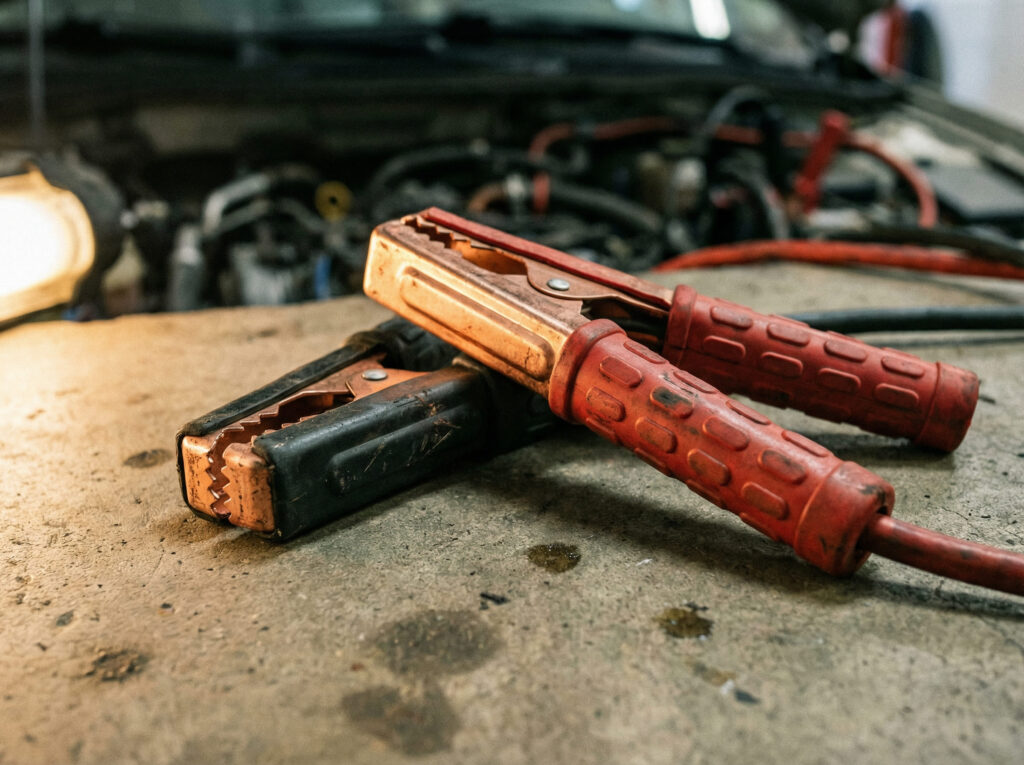
For decades, jumper cables have been the go-to solution. But not all cables are created equal. When choosing a set, you want something robust and reliable.
•Gauge Matters: The thickness of the wire inside the cable is measured in “gauge.” A lower number means a thicker wire, which can carry more power. For most cars, a 4-gauge or 6-gauge cable is ideal. Thicker cables (like 2-gauge) are better for larger vehicles like trucks or SUVs.
•Length is Key: You never know how you’ll be parked when your battery dies. A 12-foot cable is the minimum, but a 20-foot cable offers much more flexibility, especially if the cars can’t be parked nose-to-nose.
•Quality Clamps: Look for heavy-duty, insulated clamps with strong springs. Copper-coated teeth provide the best connection to the battery terminals.
The Modern Solution: Portable Jump Starters
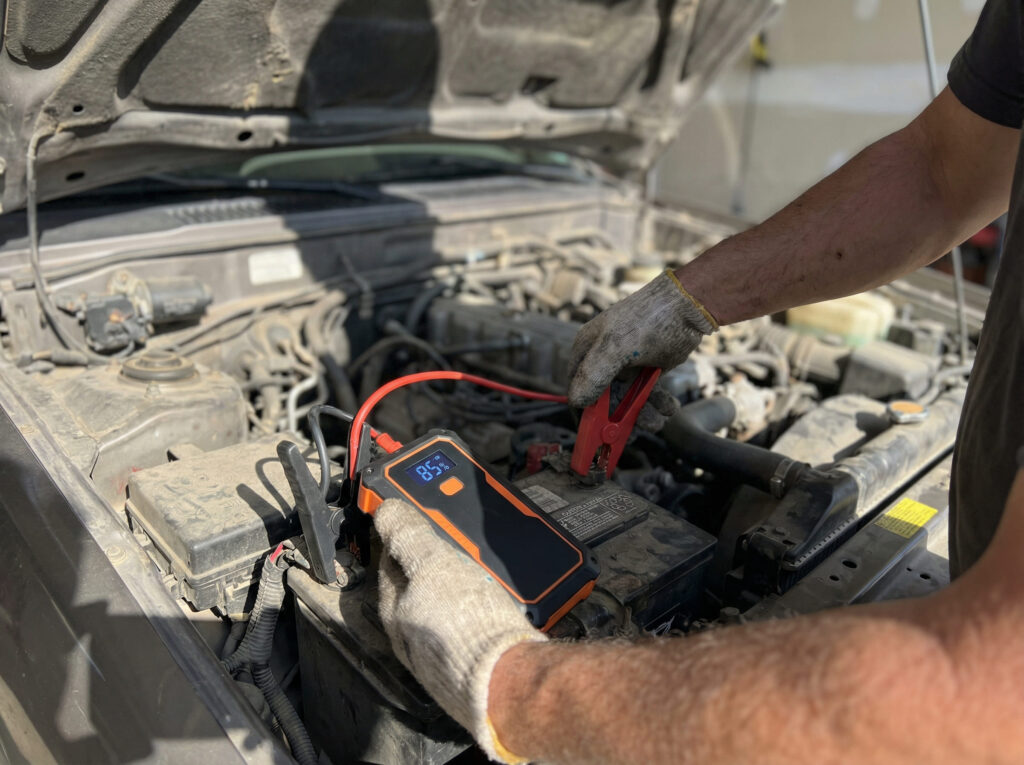
Welcome to 2026, where you don’t necessarily need another car to jump-start yours. Portable jump starters have revolutionized roadside assistance. These compact, lithium-ion power banks pack enough punch to start your engine independently.
•Convenience: They are small enough to fit in your glovebox or trunk, meaning you’re never reliant on a stranger’s help.
•Safety Features: Modern units often include reverse polarity protection (so you can’t connect them backward) and spark-proof technology.
•Multi-Functional: Many double as power banks for your phone or laptop and even include built-in flashlights or air compressors.
If you haven’t upgraded to a portable jump starter yet, it’s one of the best investments you can make for your peace of mind on the road.
Step-by-Step: How to Jump-Start a Car with Jumper Cables
Alright, let’s get down to business. If you’re using the traditional method with another vehicle, follow these steps carefully. Safety is paramount here; a car battery packs a serious punch.
Step 1: Position the Vehicles
Park the working car (the “donor”) close enough to the dead car so the cables can reach both batteries comfortably. Crucial: Ensure the vehicles are not touching each other. Turn off both ignitions, engage the parking brakes, and turn off all accessories (lights, radio, climate control) in both cars.
Step 2: Locate the Batteries and Terminals
Pop the hoods and find the batteries. You’re looking for two terminals on each battery:
•Positive (+): Usually marked with a plus sign and often has a red cover or cable.
•Negative (-): Usually marked with a minus sign and has a black cable.
If the terminals are covered in a white or greenish crust (corrosion), carefully clean it off with a wire brush or even a rag. A clean connection is essential for the power to flow.
Step 3: The Connection Sequence (The Most Important Part)
This is where people often get confused, but it’s simple if you remember the order. Think of it as creating a safe path for the electricity.
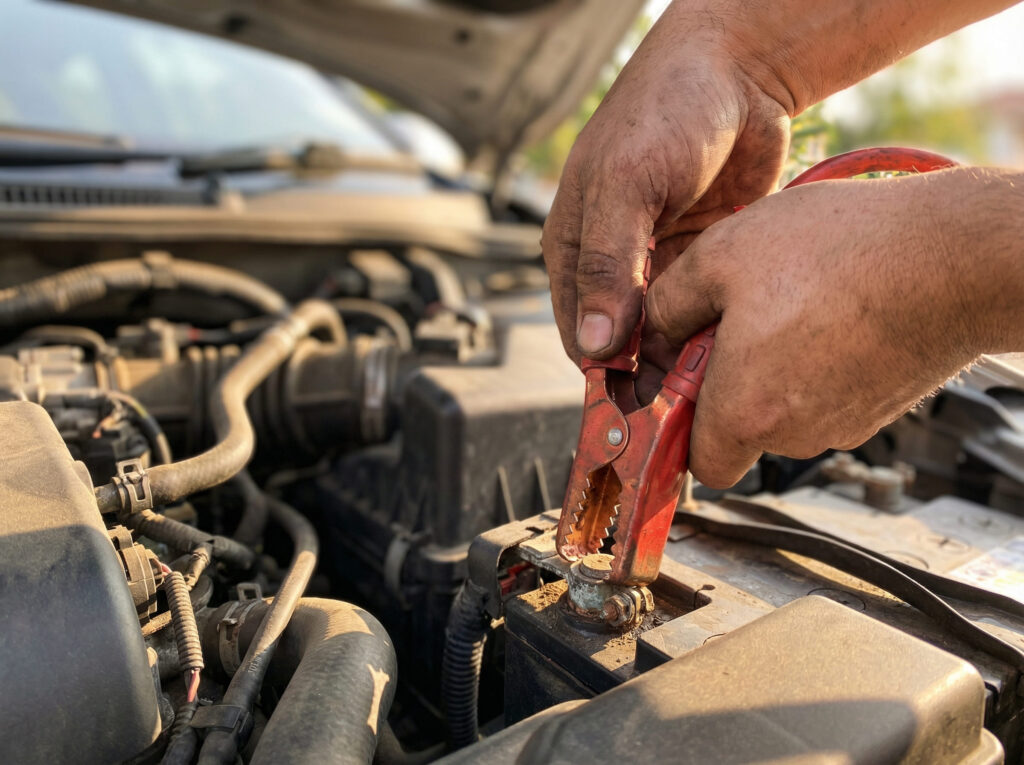
1.Red to Dead: Connect one RED clamp to the POSITIVE (+) terminal of the DEAD battery.
2.Red to Donor: Connect the other RED clamp to the POSITIVE (+) terminal of the DONOR (working) battery.
3.Black to Donor: Connect one BLACK clamp to the NEGATIVE (-) terminal of the DONOR battery.
4.Black to Metal (The Ground): This is the critical safety step. DO NOT connect the final black clamp to the negative terminal of the dead battery. Instead, attach it to an unpainted, clean metal surface on the engine block of the dead car (like a bolt or bracket). This grounds the circuit and prevents sparks near the battery, which could ignite hydrogen gas.
Step 4: Start the Engines
1.Start the engine of the DONOR car and let it idle for a few minutes. You can gently rev the engine to increase the power output.
2.Try starting the DEAD car. If it doesn’t start immediately, wait another 3-5 minutes and try again. The dead battery might need a little more time to build a charge.
Step 5: Disconnect in Reverse Order
Once the dead car is running, leave it running! Now, carefully disconnect the cables in the exact reverse order you attached them:
1.Remove the BLACK clamp from the grounded metal surface.
2.Remove the BLACK clamp from the DONOR battery.
3.Remove the RED clamp from the DONOR battery.
4.Remove the RED clamp from the previously DEAD battery.
Pro Tip: Keep the newly revived car running for at least 20-30 minutes, preferably by driving it. This allows the alternator to fully recharge the battery.
Common Mistakes and Pro Tips for 2026
Even with the steps laid out, things can go wrong. Here are some expert insights to keep you safe and successful.
The Danger of Sparks
Car batteries can emit hydrogen gas, which is highly flammable. This is why the final connection (the ground) must be away from the battery. A spark near the battery could cause an explosion. Always wear safety glasses if you have them, and never smoke near a car battery.
When a Jump Start Isn’t Enough
If you’ve followed the steps and the car still won’t start, or if it only clicks, you might have a bigger problem.
•Bad Connection: Double-check that the clamps are biting into clean metal on the terminals. Wiggle them slightly to ensure a solid grip.
•Dead Battery: If the battery is very old (more than 3-5 years) or completely drained, a jump might not be enough. It might be time for a replacement.
•Faulty Alternator: If the car starts but dies immediately after you remove the cables, your alternator (the part that charges the battery while driving) is likely failing.
•Starter Issues: A rapid clicking sound often points to a bad starter motor, not just a dead battery.
The Rise of AGM and Lithium Batteries
In 2026, many newer vehicles use Absorbent Glass Mat (AGM) or even lithium-ion starter batteries instead of traditional flooded lead-acid ones. While the basic jump-starting principles remain the same, these advanced batteries can be more sensitive to voltage spikes. This makes using a high-quality, modern portable jump starter with built-in safety regulators even more critical than relying on an older, potentially unstable donor vehicle.
Empowered and Ready for the Road
A dead battery doesn’t have to ruin your day. By understanding how to jumpstart a car safely and effectively, you transform a stressful situation into a minor inconvenience. Whether you rely on the trusty jumper cables or embrace the convenience of a modern portable jump starter, the key is preparation and knowing the correct steps.
Remember the golden rule: Red to Dead, Red to Donor, Black to Donor, Black to Metal. Keep your gear in good condition, stay calm, and you’ll be back on the road in no time.
We update this blog regularly to improve our content and bring you the latest automotive tips for 2026 and beyond. Let us know your thoughts, or share your own jump-starting stories, in the comments below!